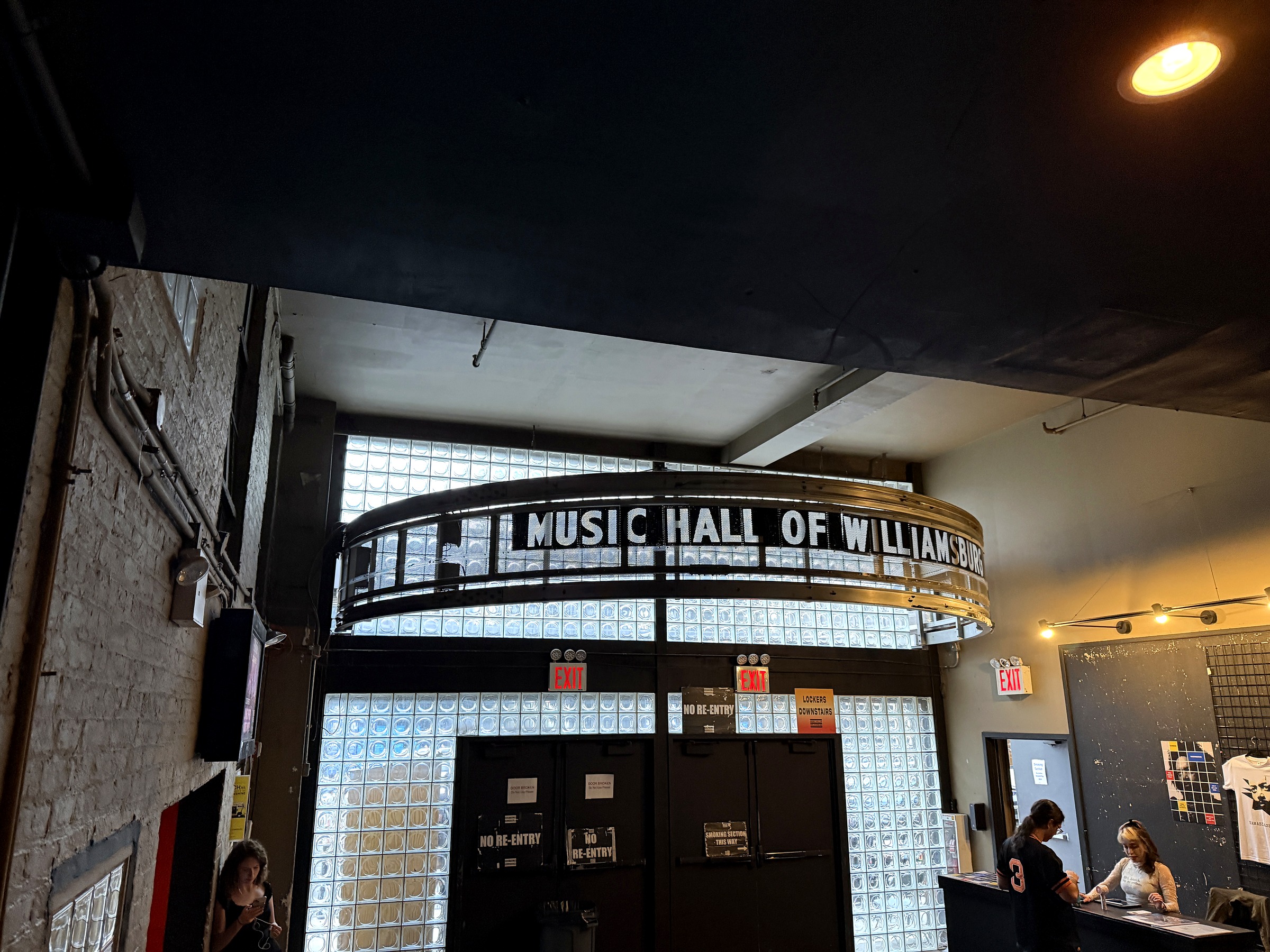
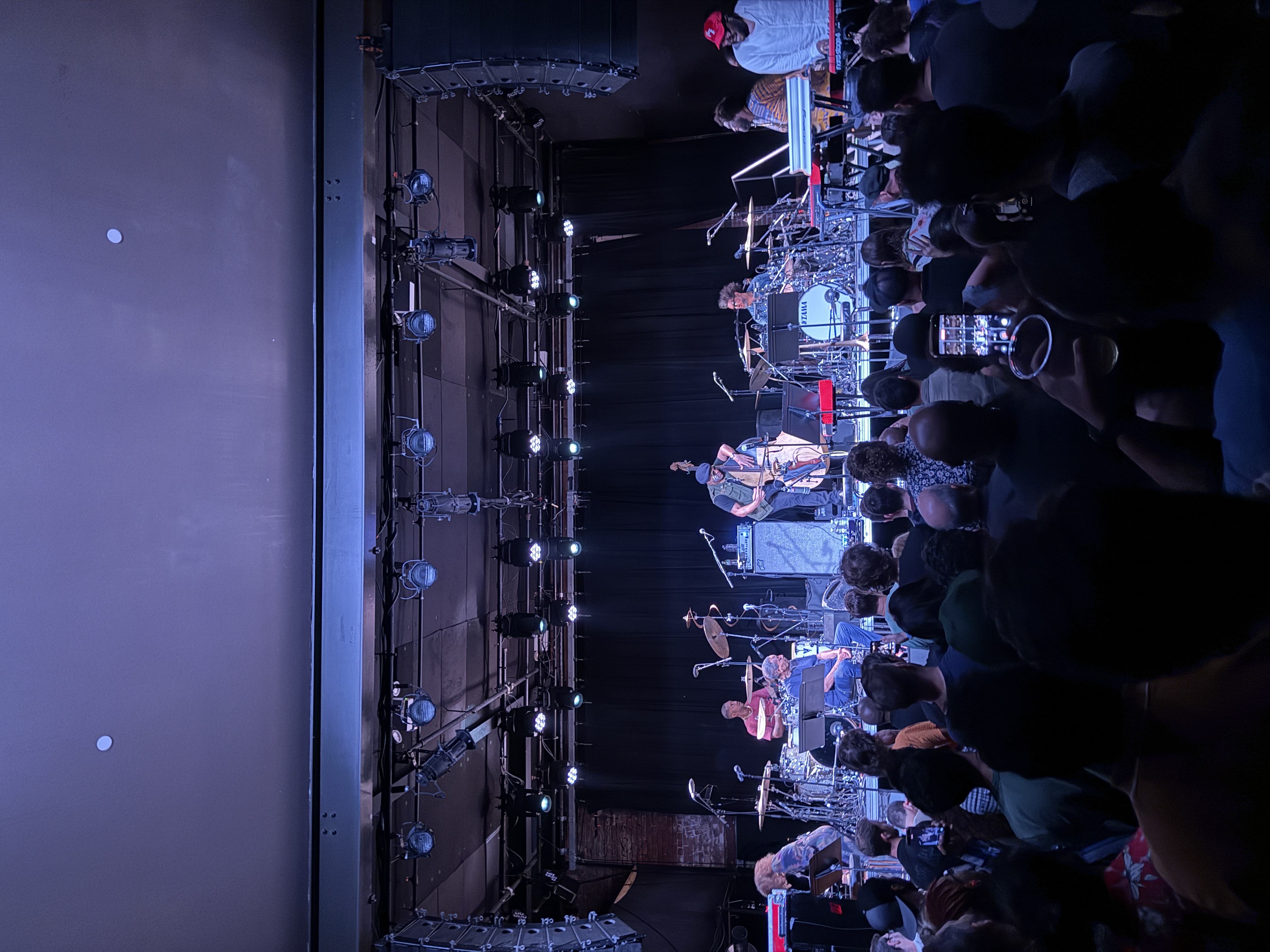
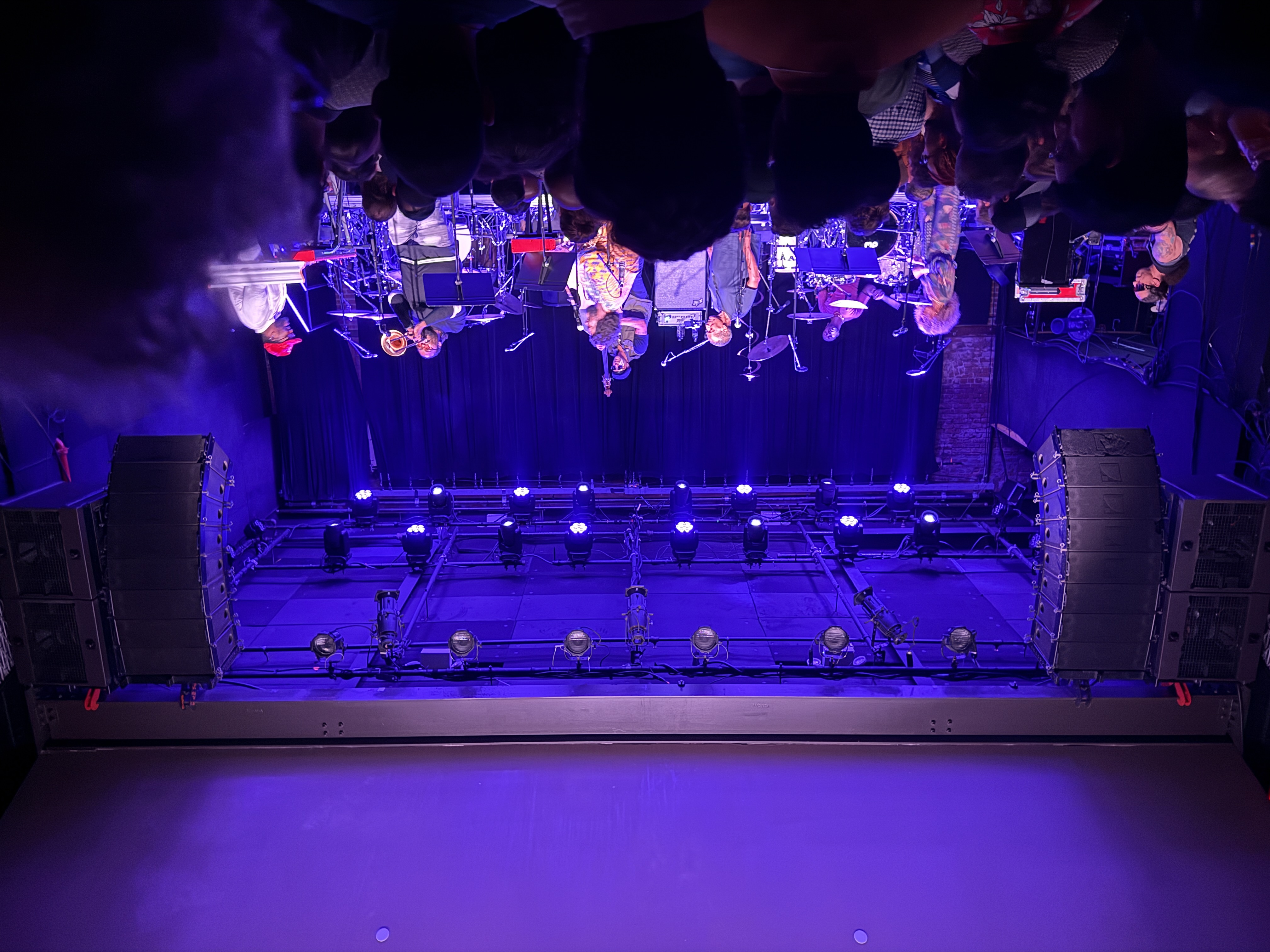
Music Hall of Williamsburg has been the venue that catches artists on their way up since 2001, when it opened as Northsix and pulled indie bookings across the river before Manhattan noticed. Tame Impala, Phoebe Bridgers, and The Weeknd all played there small, years before anyone needed a bigger room. The building’s lease runs out at the end of this year, which means every night still left on the calendar carries a little more weight than it used to.
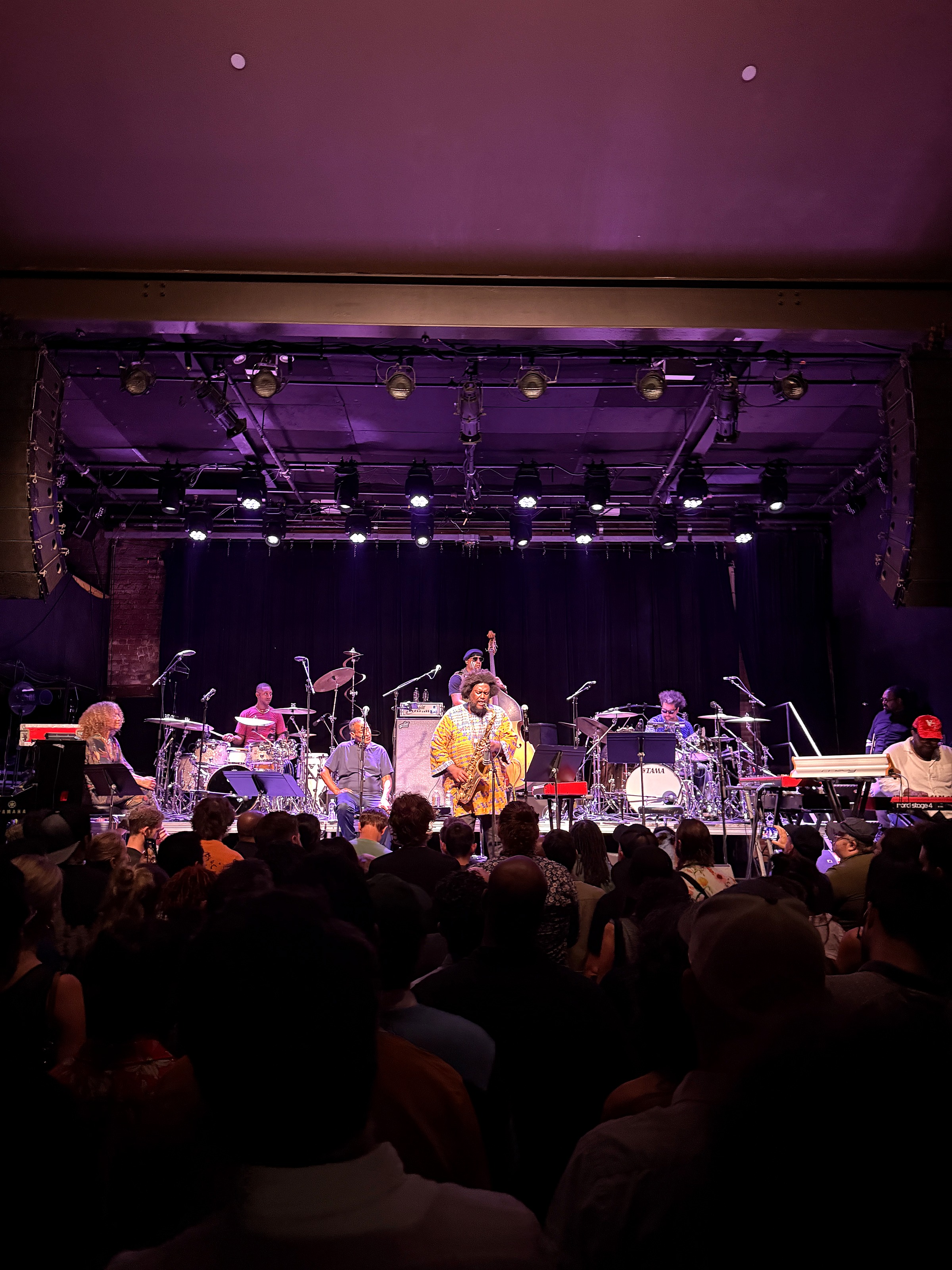
I got there early enough to watch the room fill in without a line. The house system played Eminem, Dr. Dre, and Snoop Dogg, a stretch of early-2000s hip hop that had nothing obviously to do with a jazz saxophonist from Los Angeles. By eight the room was packed, people who looked like they’d been listening to Kamasi Washington since The Epic came out a decade ago.
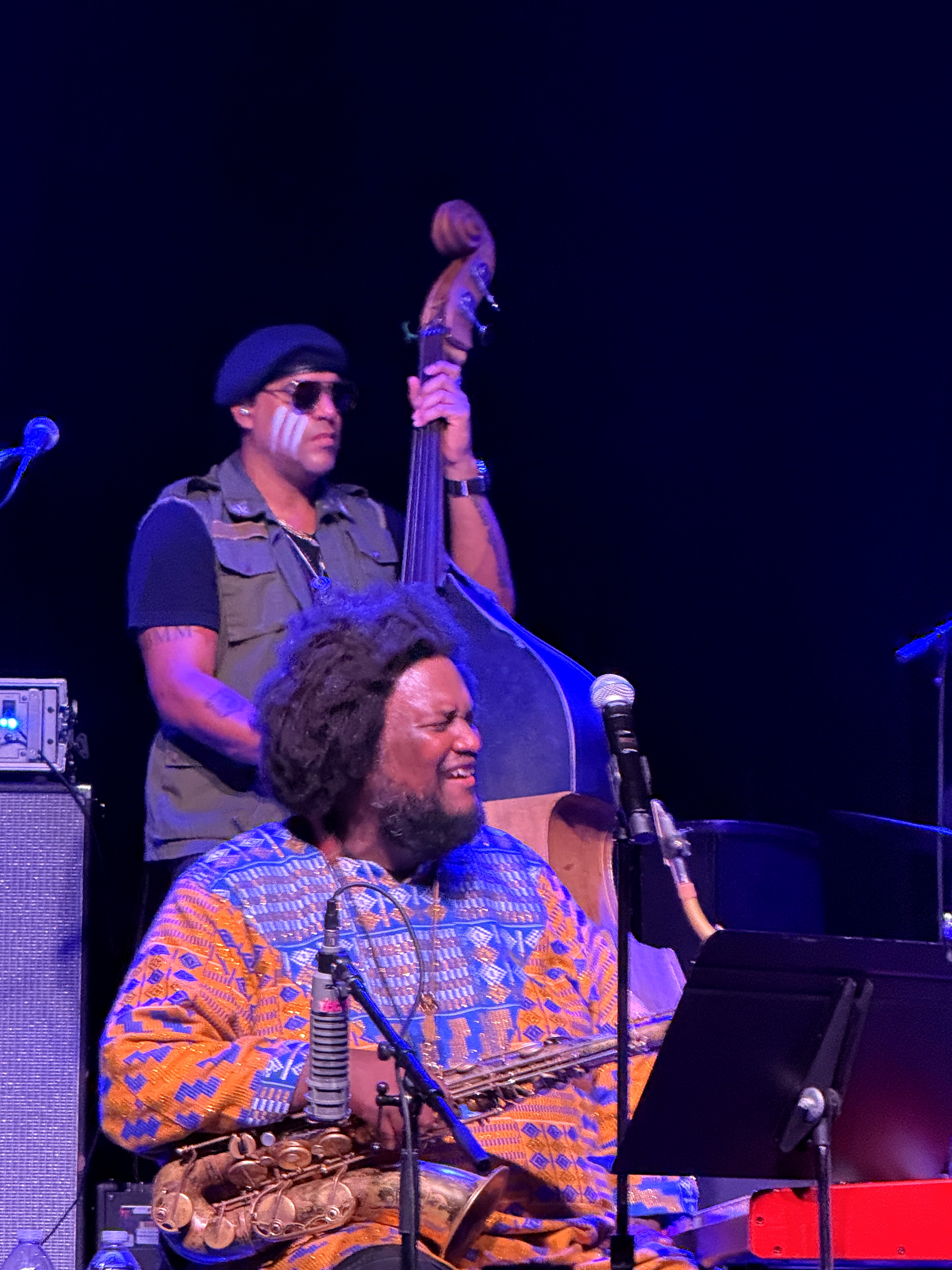
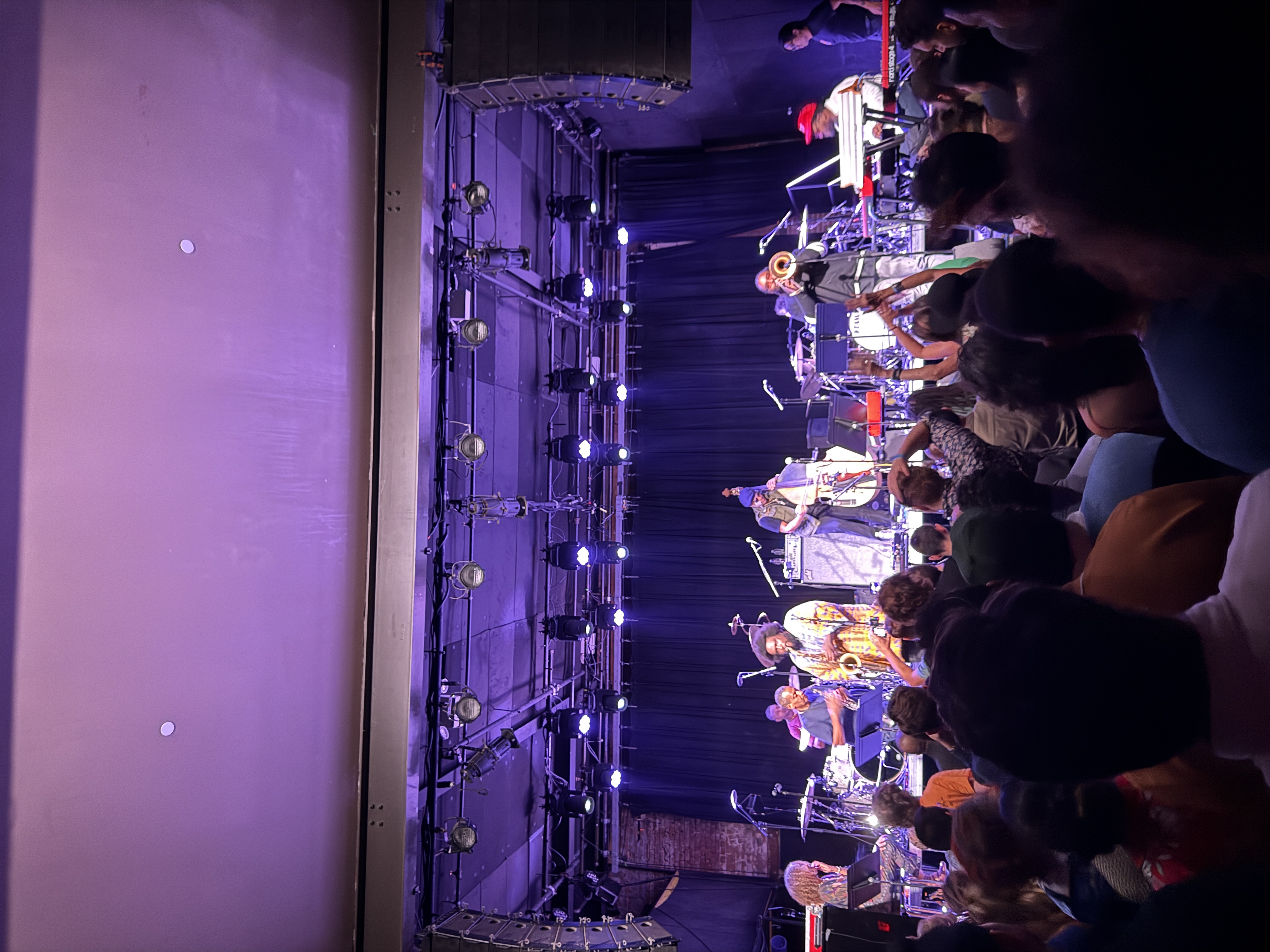
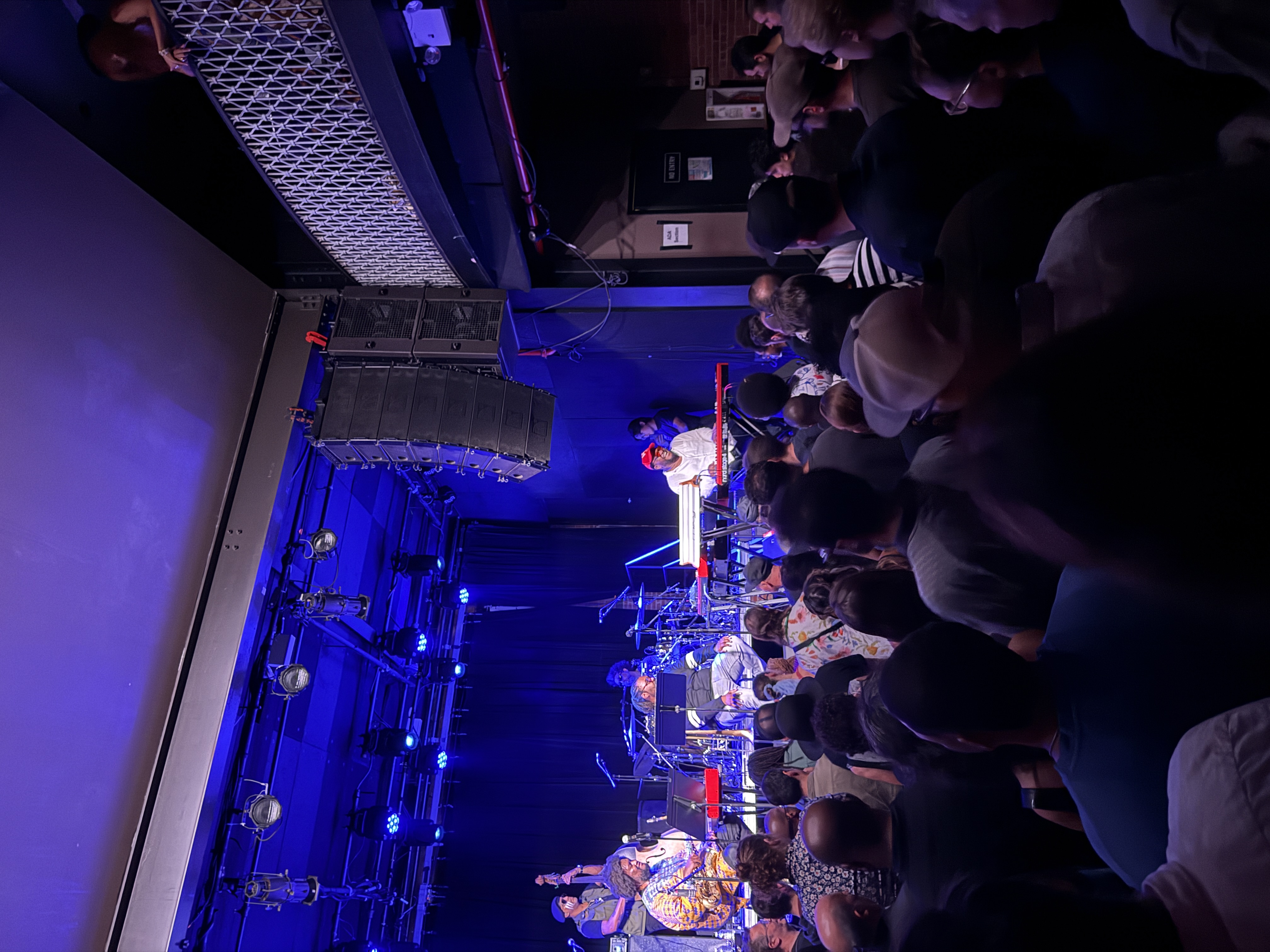
He opened by saying he’d missed Brooklyn, that it had been a minute. Then he spent the whole set cueing his own band in and out, more conductor than frontman, and once they started playing there was nothing else in the room. Two drum kits sat at the back of the stage, Miles Mosley’s bass planted in between. Everyone up there got at least one turn out front, and most of them go back years with Kamasi and each other, the same circle of Los Angeles musicians who came up together.
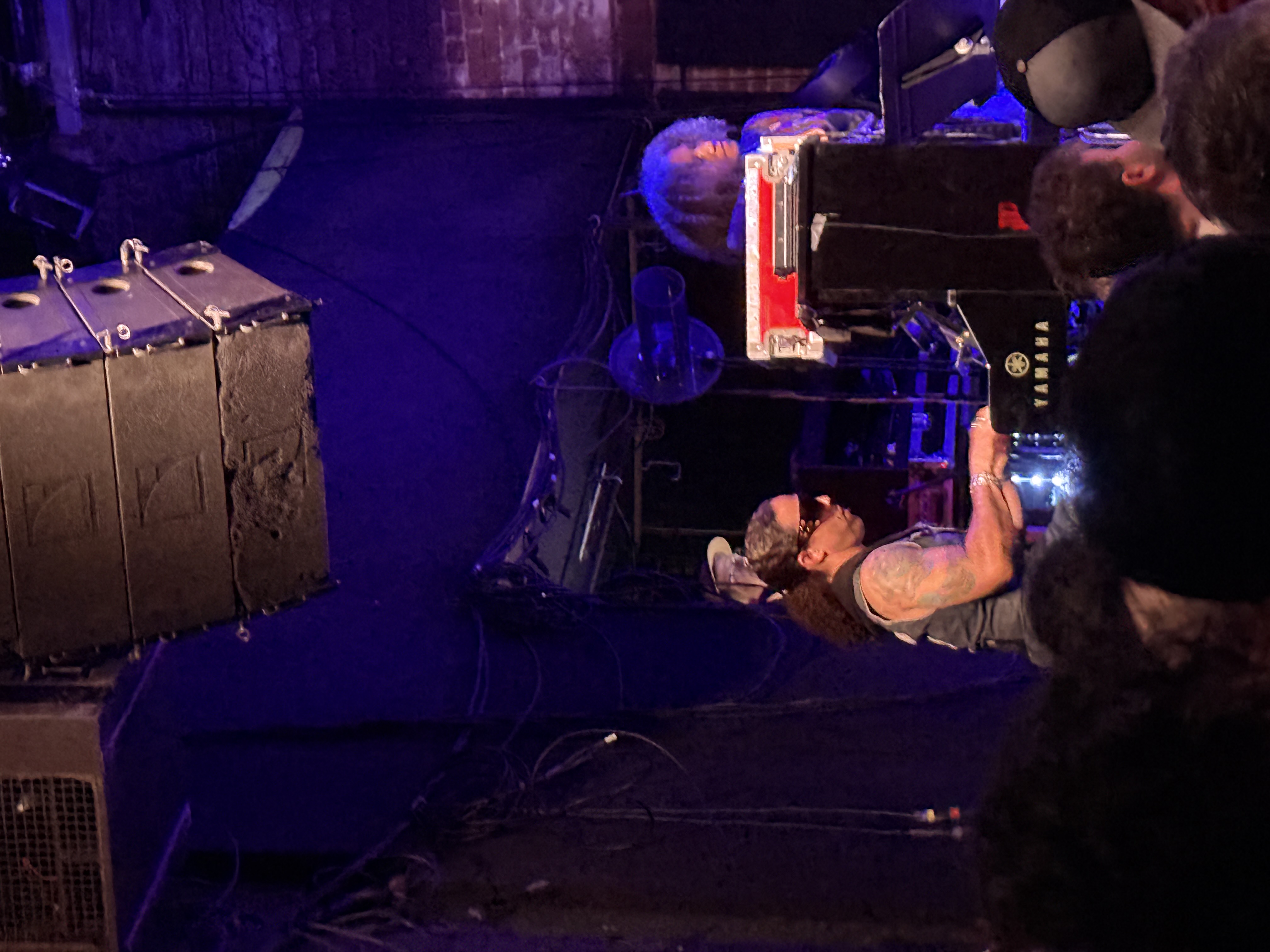
Cameron Graves took the first real spotlight, a piano solo that ran for minutes without stopping, the kind that makes you forget there’s a whole band waiting behind it. When it ended, the group didn’t just come back in. They answered him, playing his own last phrase back at him while he kept soloing on top of it. Call and response between one man and everyone else on stage.
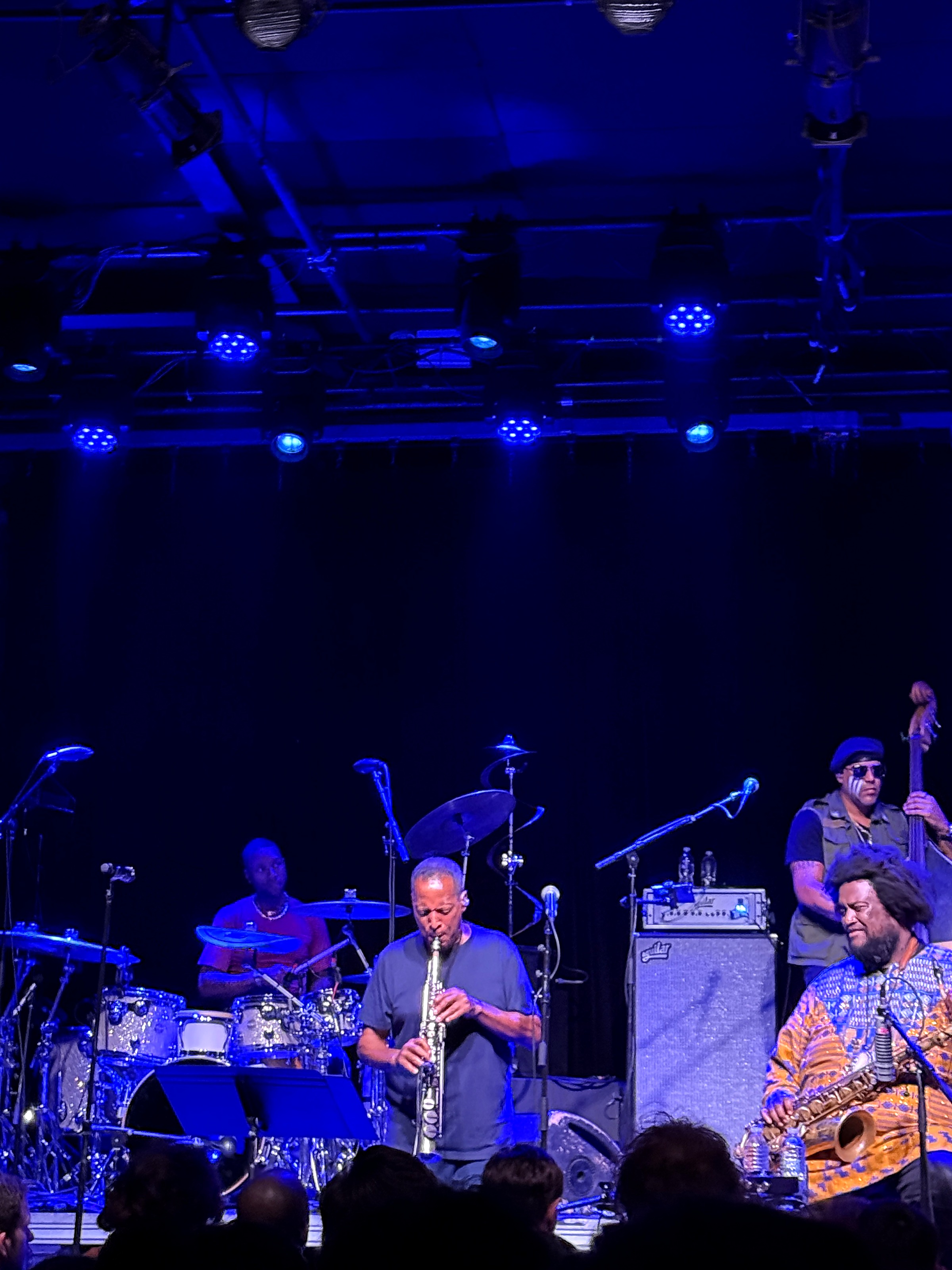
Then Kamasi stopped the set to talk about Ryan Porter. Porter was the band’s longtime trombonist, going back to when the two of them met at eleven years old at a summer jazz program, trading solos that sounded the way kids play before they know how to make it complicated, Kamasi said, some good, some not. Porter died this spring after a car accident, at 46. Kamasi told the room that if you’ve heard him play, you’ve heard some of Ryan Porter in it, and the band played The Psalmist in his memory. Lemar Guillary played trombone in his place that night. Somewhere in his solo a drummer lost a stick mid-hit. He kept going on one hand, dropping the volume until he could reach for another. It felt like the kind of gap a room like that one makes space for, not smoothed over, not announced, just there.
Miles Mosley took the bass solo next, and everyone standing near him cleared out so he could have the space. He worked the entire neck of the instrument, not just plucking it but dragging the back of his fingers across the strings, then pulled out a bow and kept going. By the end of it, the guy standing in front of me was actively swaying to the music.
Rickey Washington, Kamasi’s father, took the clarinet solo that followed, and the whole room felt it shift, band included. He and the trombone player shared a single microphone during Kamasi’s own solo later in the set, two horns leaning into the same small circle of sound. Brandon Coleman came in on keys right after, and by then nearly every seat on stage had been the center of attention at least once. Patrice Quinn stepped up for a vocal feature of her own, her voice also threaded through the background of other songs across the set.
Between songs, Kamasi told the story of how he ended up scoring music for Lazarus, the new anime series from Shinichiro Watanabe, the director behind Cowboy Bebop. He said he’d loved anime since he was a kid, back when people treated it like something to be a little embarrassed about, and that it doesn’t carry that weight anymore. His contribution, a song called “Vortex,” started, in his telling, as something built out of 80s and 90s references.
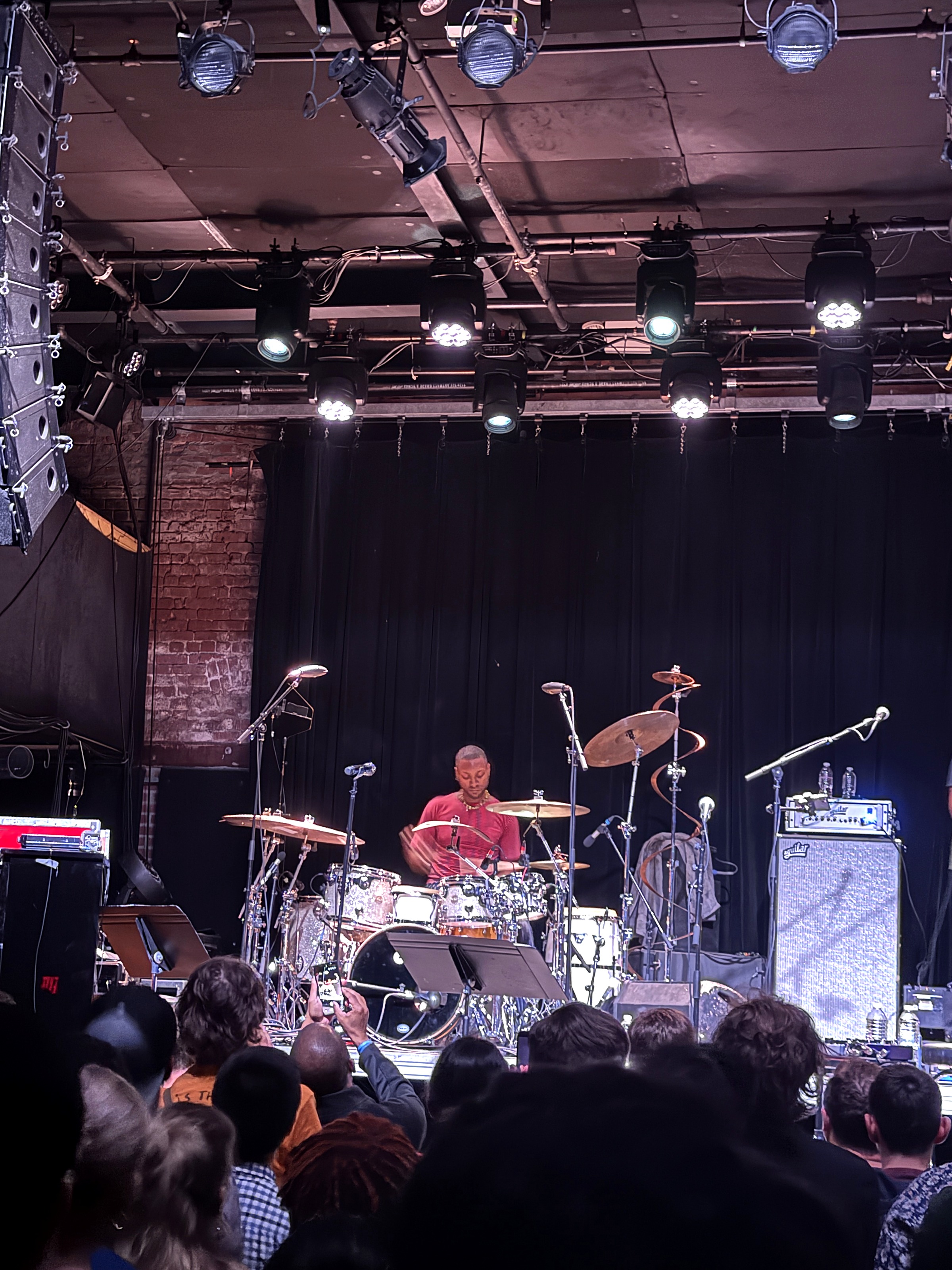
The two drum features came from opposite ends of the set. The first belonged to Tony Austin, a solo I only placed afterward, working out that between the two kits it had to be him. The second was Mike Mitchell’s, and it built the whole room up, dropped everyone down to a hush, then rebuilt to the loudest ovation of the night, hands up everywhere, Kamasi walking back out to close it. The set closed with Prologue, and the whole floor was dancing by the time it ended, loud enough that I felt it more than heard it.
He closed by thanking Brooklyn, thanking New York, telling the room they were amazing people, and promising the band would be back soon. They played the same room again the very next night.
Music Hall of Williamsburg has less than six months left on its lease. Whatever else closes out that calendar, I’m glad this one was still on it.