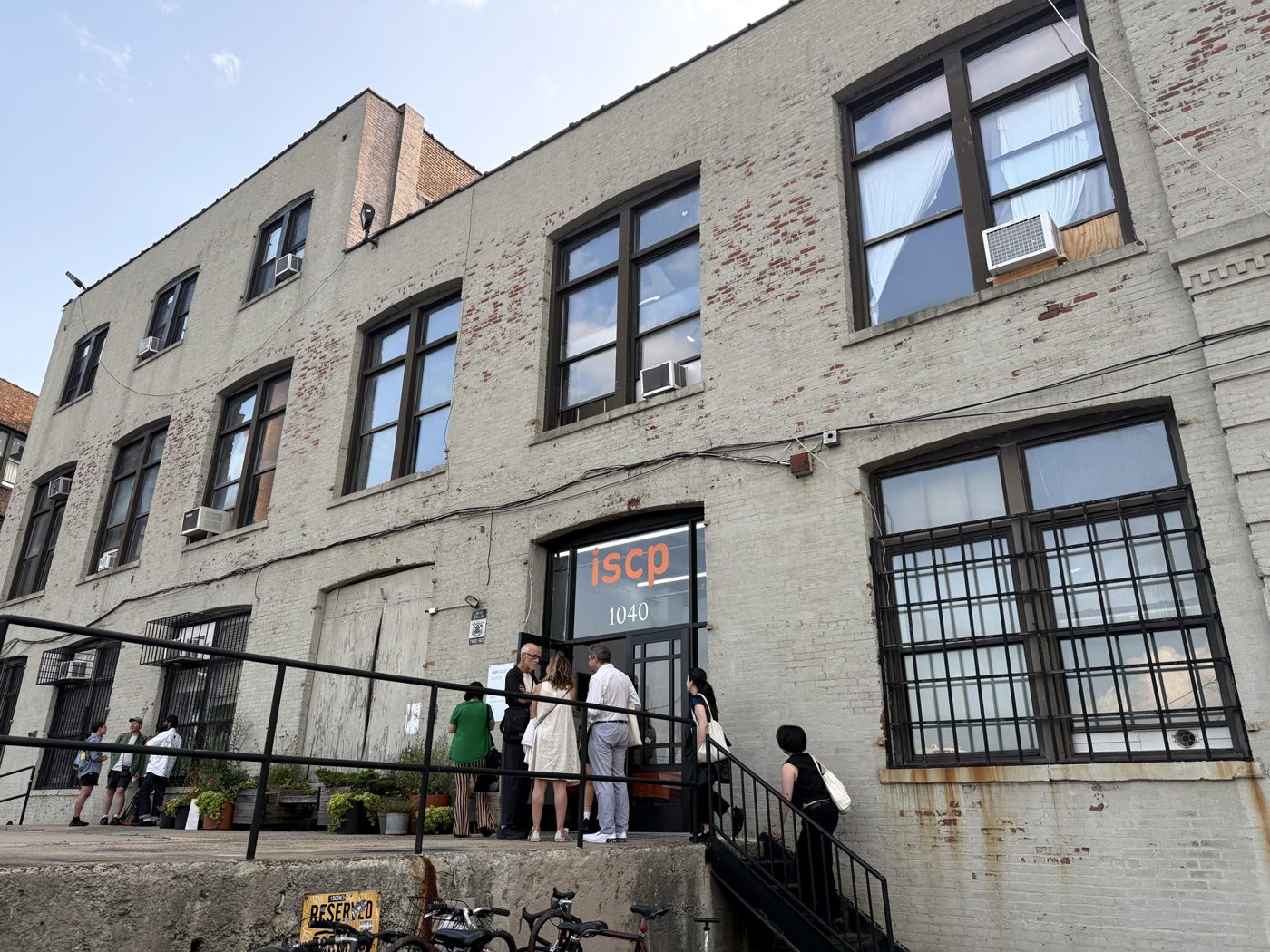
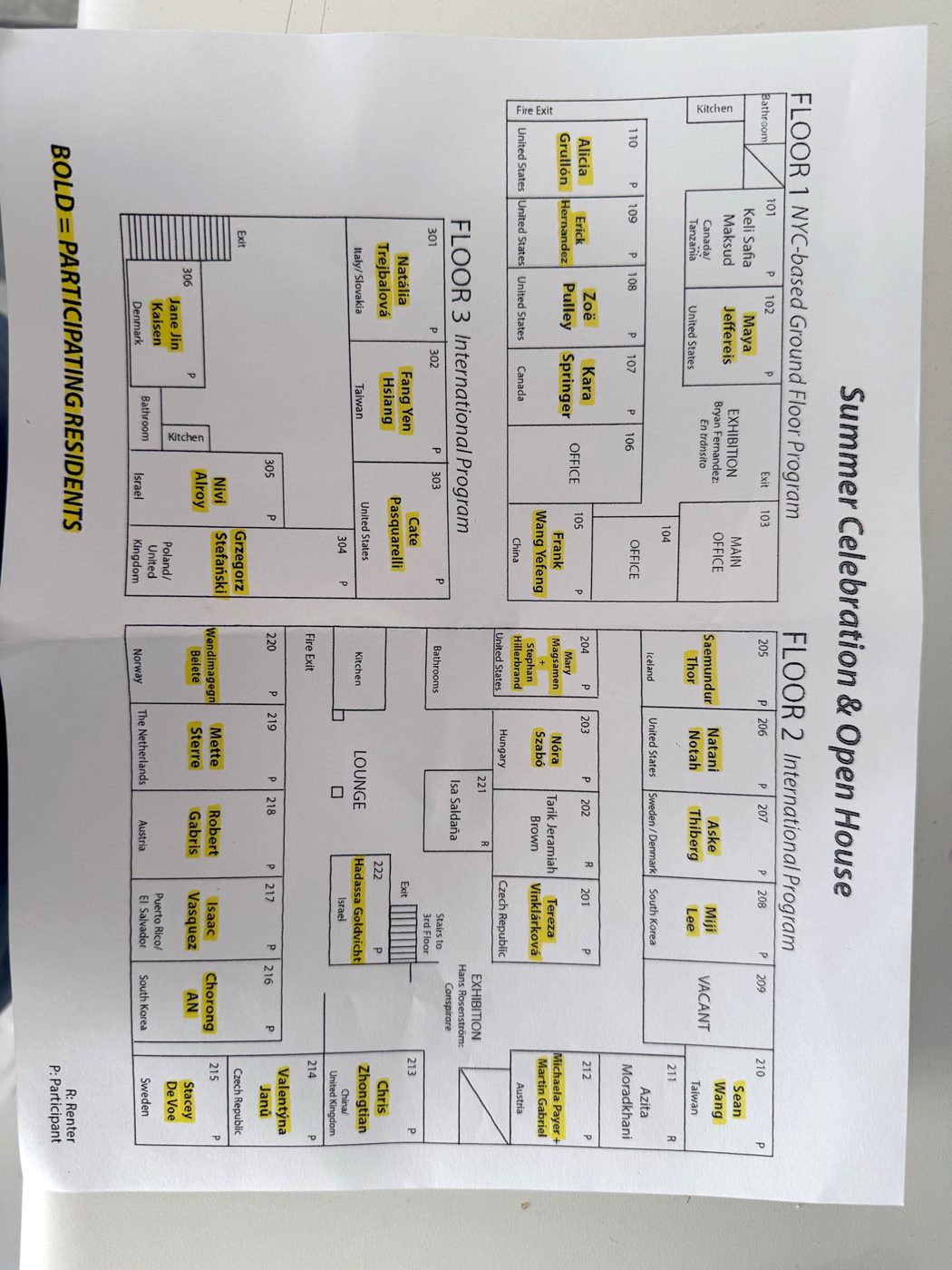
ISCP is housed in a former printing plant at 1040 Metropolitan Avenue, built in 1901. In 1902, Willis Carrier installed what’s widely credited as the first modern air conditioning system in that same building, to keep Brooklyn humidity from warping paper on the presses. The building has kept its bones. Massive sliding metal fire doors are still mounted along the walls. Heavy timber beams hold up the ceilings. The stairs to the third floor are steep. The hallways are airy, and the studios are full of natural light.
The building sits in East Williamsburg, a stretch where industrial buildings, working artists, and a growing run of bars and restaurants are still sorting out what the neighborhood is becoming. The murals nearby are the best I’ve seen in the city. One wall shows astronauts drifting past a half-built, half-ruined city under the words “QUESTION EVERYTHING.” A rolldown gate a few doors down is covered in grinning, tangled cartoon monster faces.
Up on the second floor, Bo Hubbard and Ezra Campelli were pouring sangria and greeting people as they came in. Hubbard manages ISCP’s finances and administration, and Campelli keeps the building itself running. That night, they were also the two people making everyone feel welcome, which made the floor feel less like an open studio and more like being invited into someone’s home.
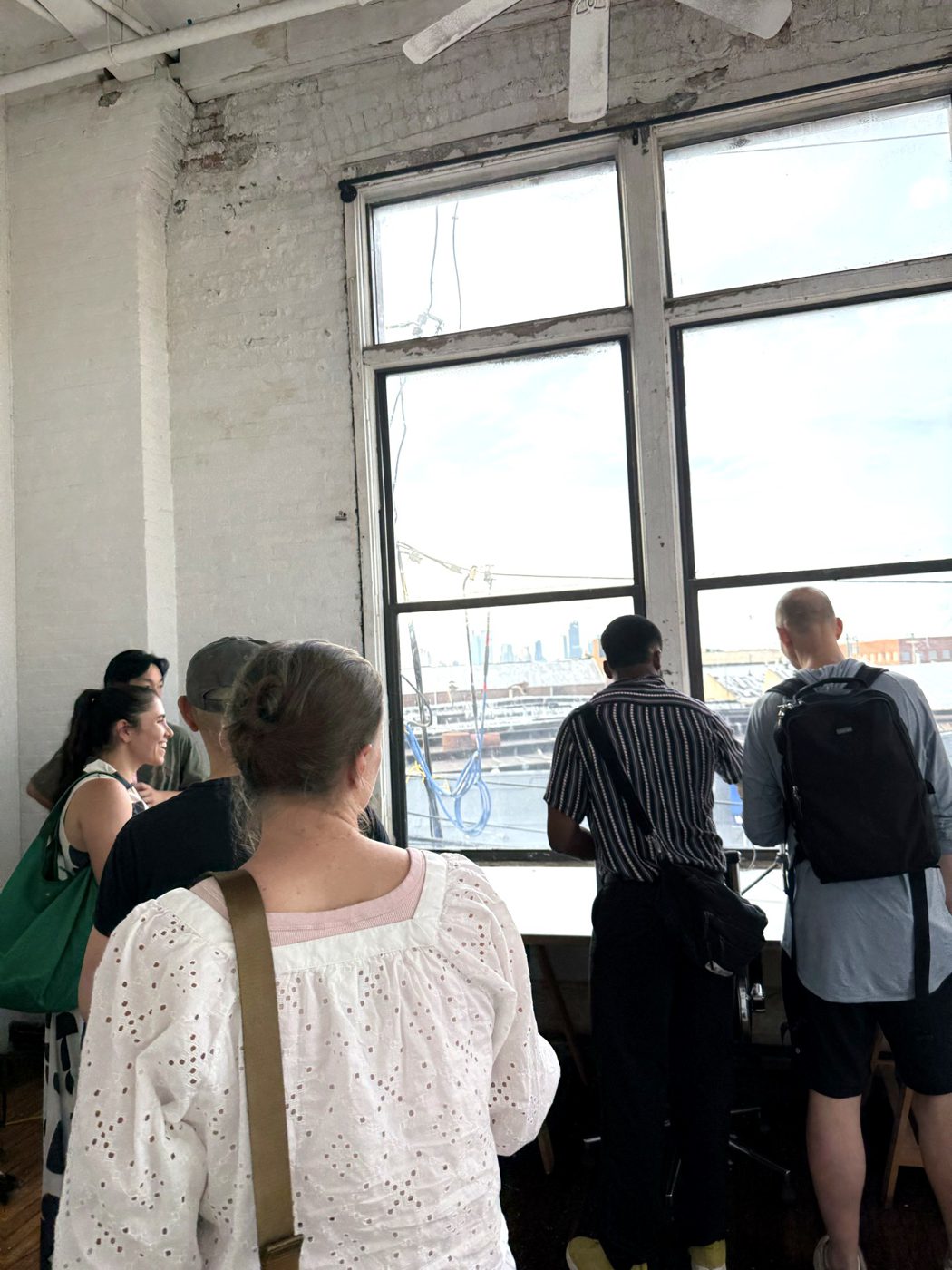
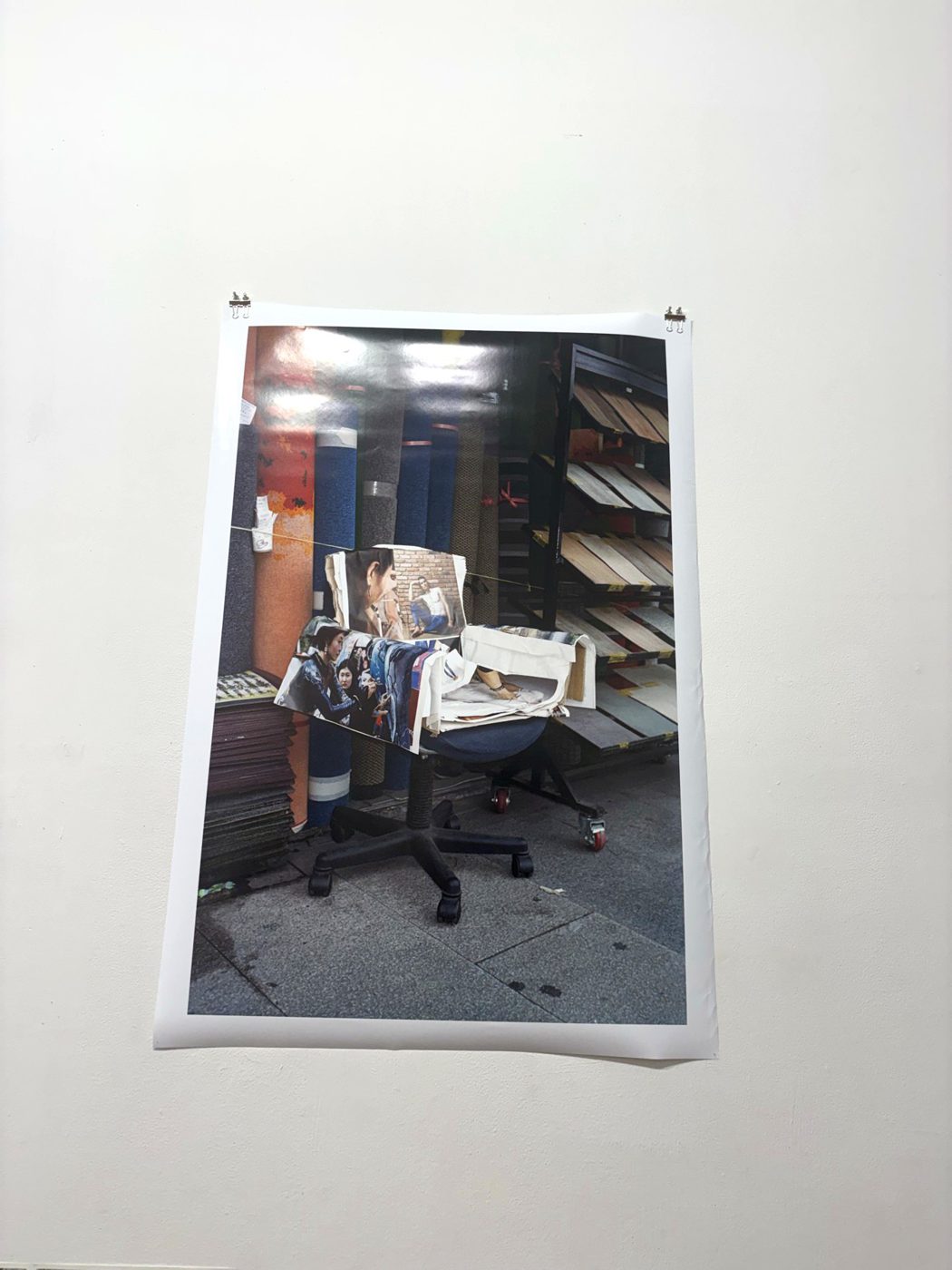
Sean Wang treats his entire studio as the artwork. Wang is a photo-conceptual artist who works from a visually impaired perspective, and for his “Ideal Artist Studio” project, visitors photograph his studio for him, documenting his own work and life as part of the piece itself. He also invited us to photograph the view through one of his big windows, the sidewalk, the buildings across the way, the neighborhood itself, extending the same idea out past the walls of the room.
A typed note sat on his desk. “How long does it take to move a box from here to there?” it asked. “I put all the photographs I took in New York into a box, and then I moved the box outside. After that, I will no longer make photographic art.” He gave me a print of a photograph he’d taken years earlier. His own hand filled the foreground, close enough to see every crease. Behind it, small and out of focus, people moved along the ground far below. The same distance sat in both the print and the note on his desk, between what’s close enough to hold and what’s already moved on.
Next door, Michaela Payer and Martin Gabriel draw together as Payer Gabriel, an Austrian collective. Watching them, it was clear how well they know each other’s process. They can work through a single drawing together, seamlessly, as if it’s coming from one hand instead of two. Their own writing on the practice backs this up. The question of who is doing what becomes beside the point, since the work comes out of shared dialogue rather than divided labor, with no individual signature marking one artist’s hand from the other’s. Research and reading get absorbed first, then the drawing itself unfolds the way thoughts actually move, one idea leading to the next without a fixed destination. Their current piece, Untitled/Cosmogram, is a large drawing built from that same instinct, an encyclopedic tableau that catalogues the world rather than narrating it, extending, in their own words, “toward infinity until categories in their loose, chaotic arrangement dissolve of themselves.”
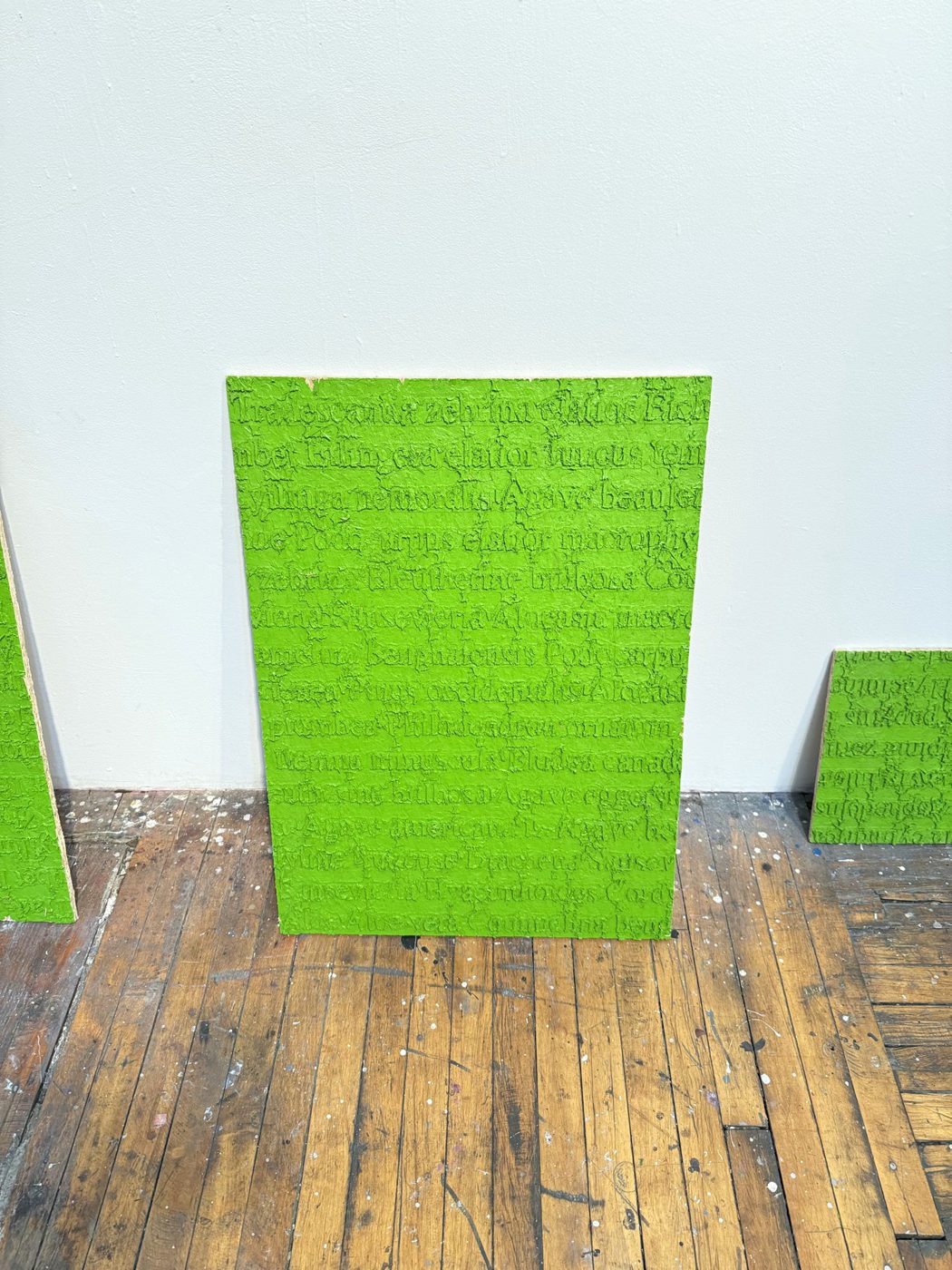
AN Chorong, a photographer from South Korea, fills her studio with the raw material of how images circulate. A mirror selfie hangs alongside snapshots of keys, wallpaper, and half-remembered moments, all part of how she studies what happens to a picture once it starts moving between people. Isaac Vazquez works in assemblage, exploring Afro-Latinx histories and diasporic timelines. Green panels in his studio are embossed with cursive text listing plant names like Agave, a quiet way into a much larger history of migration and land.
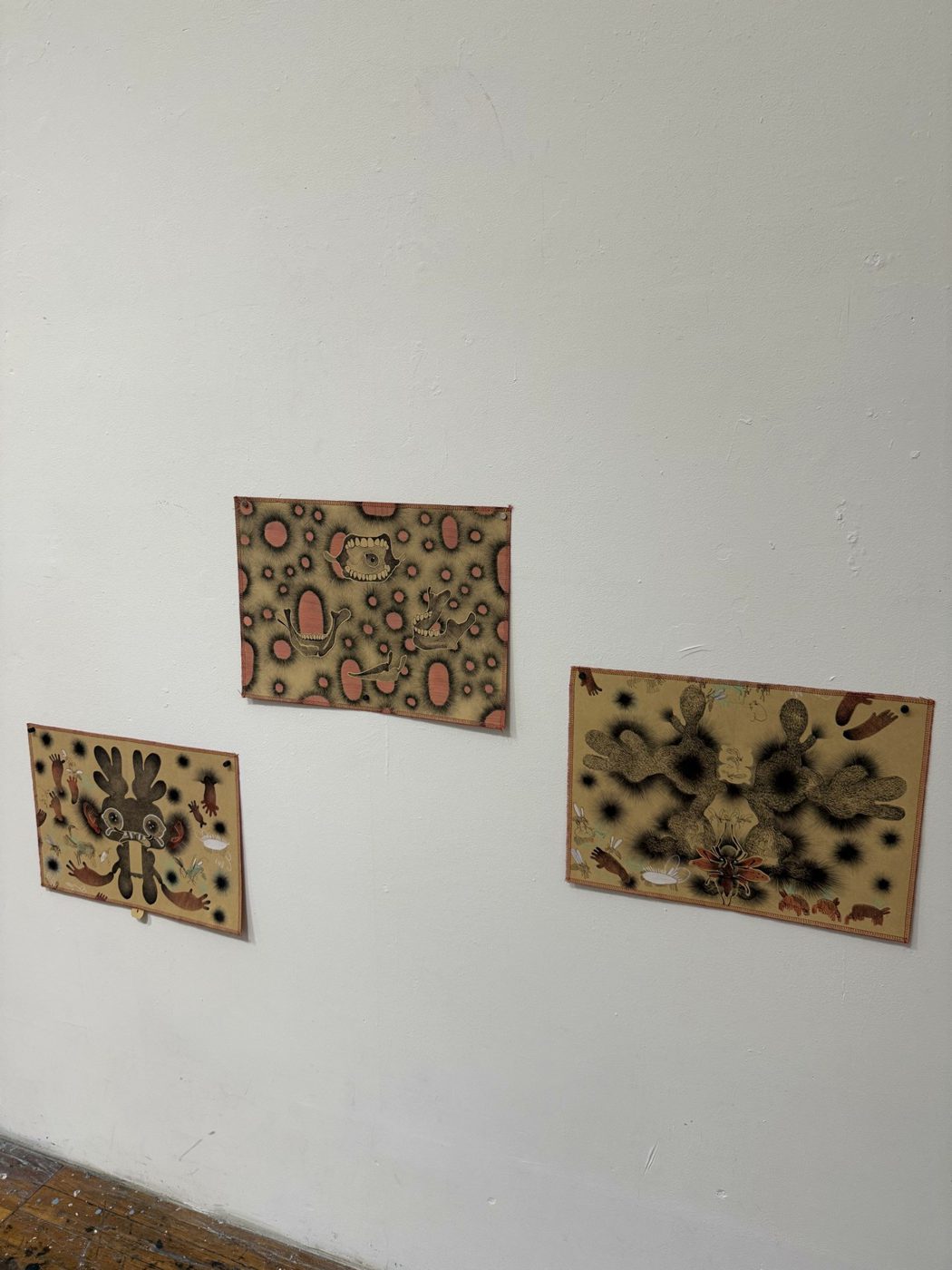
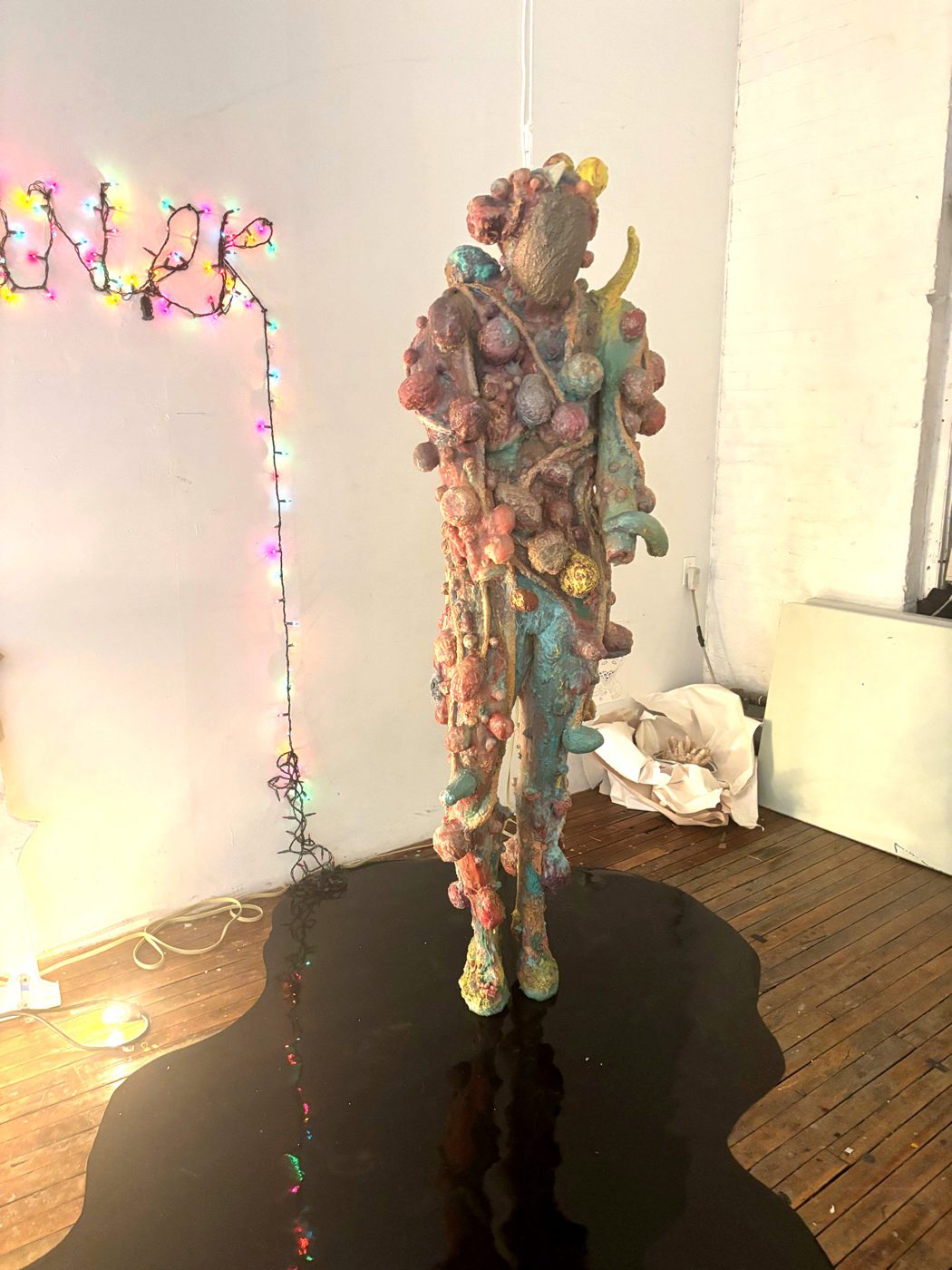
Robert Gabris, working between Austria and Slovakia, examines identity through drawing and performance. A recent piece, titled Asylum, A Poem of Unrest, staged in 2024, sits at the center of that inquiry. His drawings read like Rorschach tests, mirrored and symmetrical, but he was quick to correct that assumption. He isn’t interested in inkblots. He just likes symmetry. Mette Sterre, from the Netherlands, builds sculptural body masks that blur where a person ends and a landscape begins. One stood in her studio on a black reflective floor covering, pastel and bulbous, somewhere between a body and a coral reef.
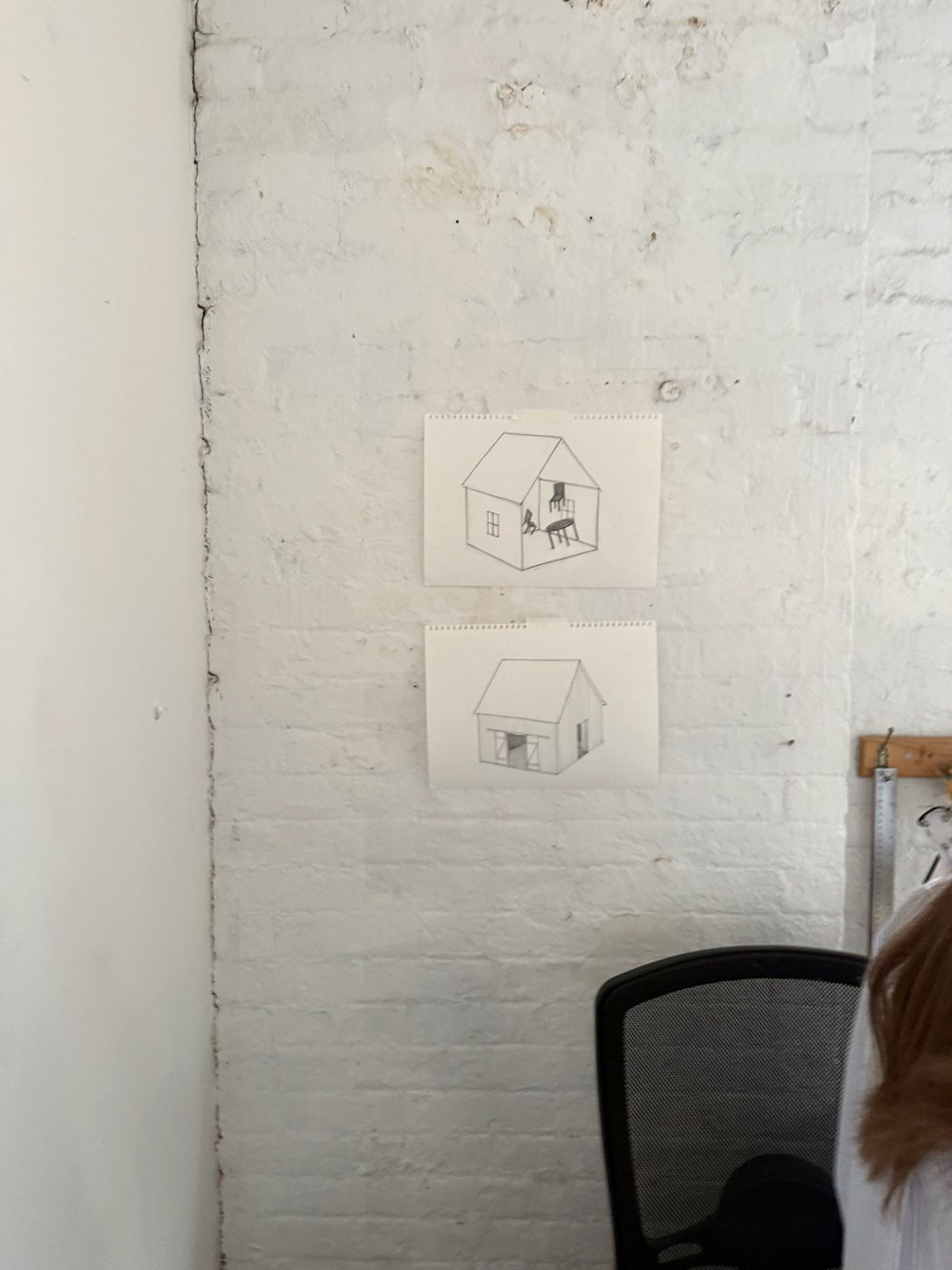
On the third floor, Cate Pasquarelli builds miniature worlds out of the imagery of American pastoral life: steepled churches, colonial-style houses, white picket fences, school buses. Three small houses sat lined up on her windowsill when we visited, a blue one, a white one shaped like a church, a yellow one glowing from a painted window. She draws on Shirley Jackson and Flannery O’Connor, writers she admires for making ordinary things feel strange and strange things feel ordinary. For Pasquarelli, a church in one of her dioramas isn’t about faith. It’s a symbol of colonial architecture and what she calls the country’s darkest histories. As she put it in one interview, “fiction can tell a more honest story than what we consider to be the truth.”
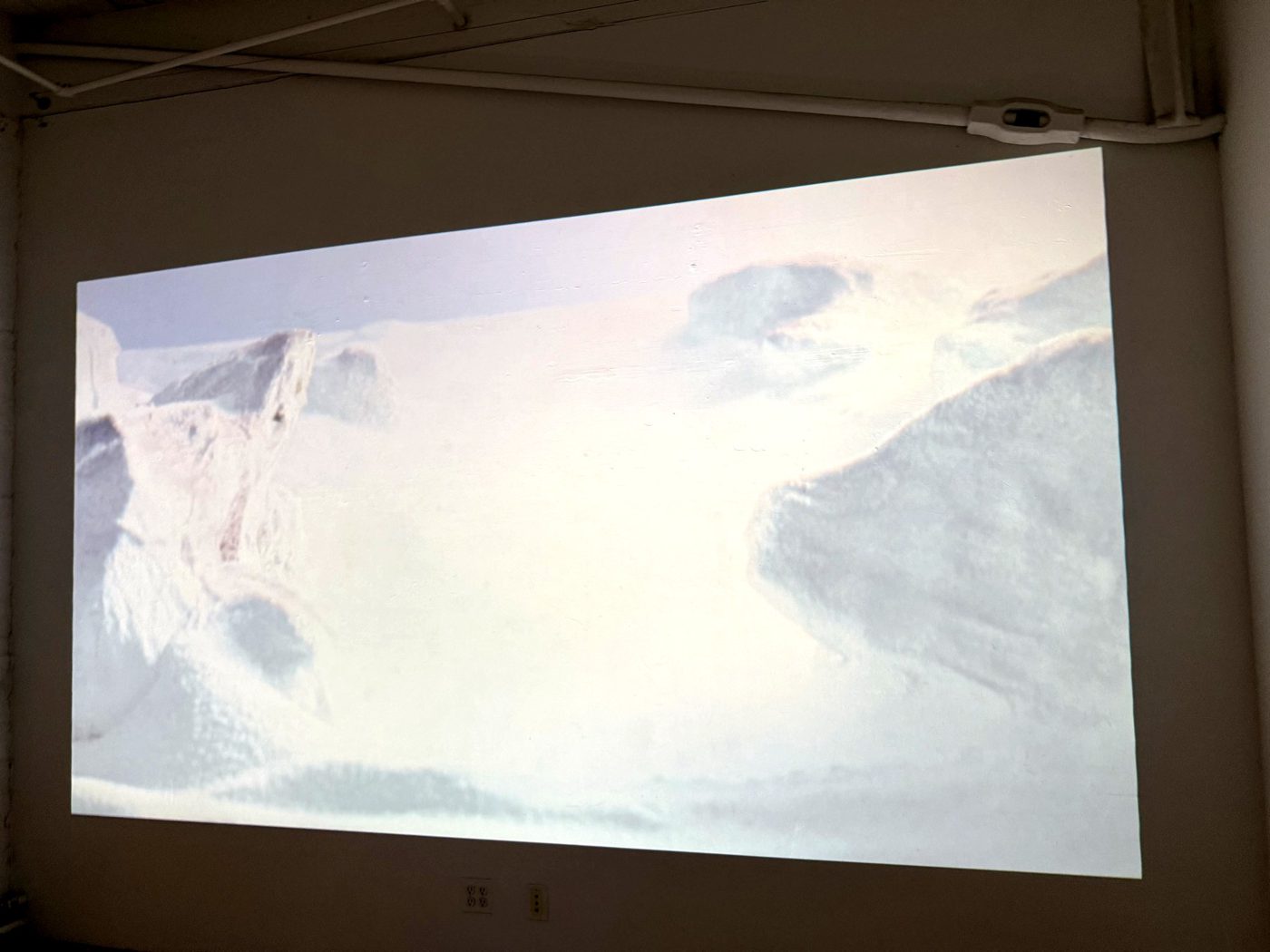
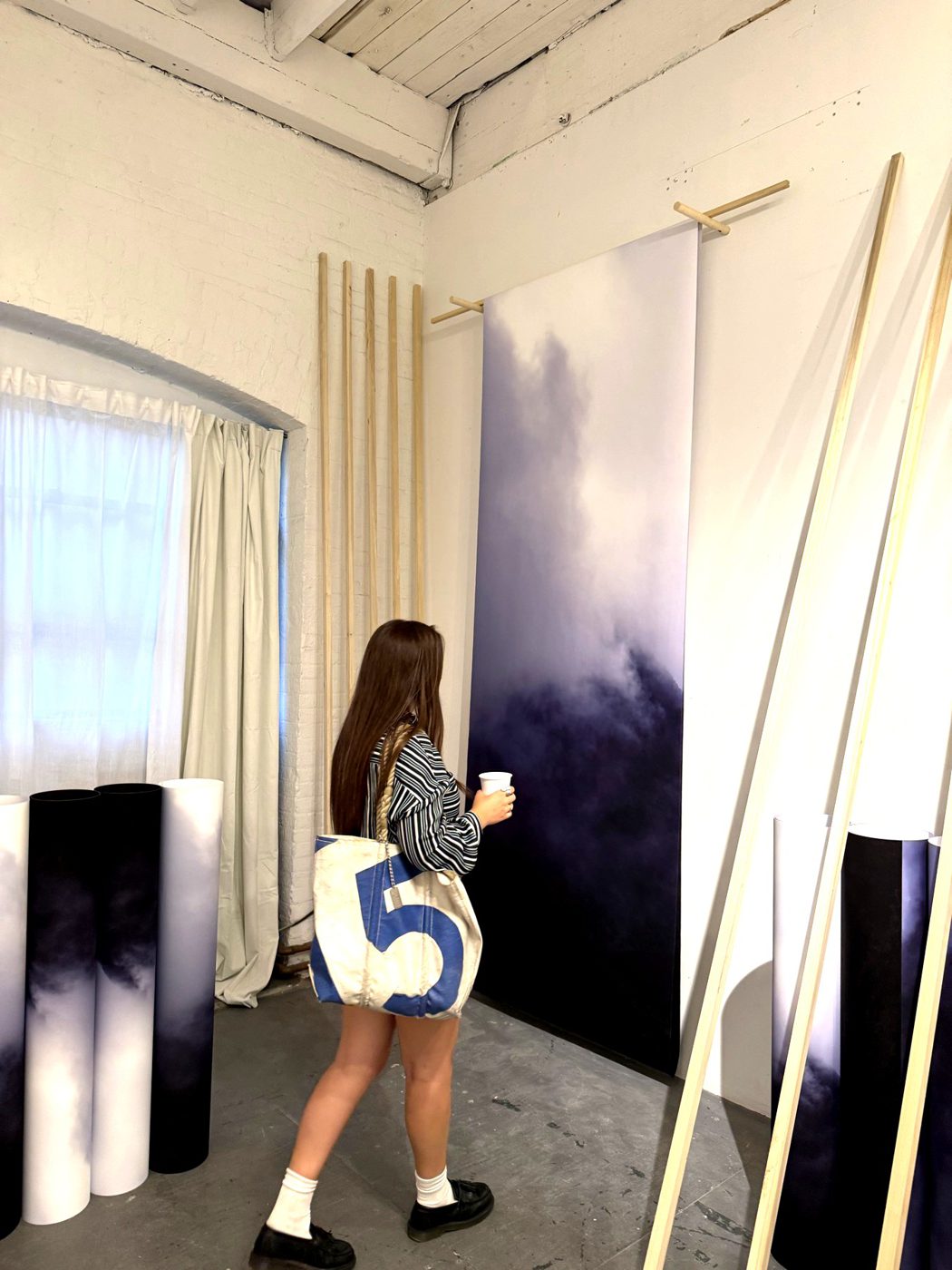
Natalia Trejbalová was born in Košice, Slovakia, in 1989, and now works between Milan and Bratislava, building sculptures out of unlikely materials: construction materials, chemicals, pigments, 3D printed objects. Her current piece at ISCP, Forecast, an eleven-minute video completed this year, imagines the more-than-human ecosystems we belong to through scientific research and the speculative logic of science fiction. In her studio, the part I stayed for showed pale mountains and ice, shifting slowly across the wall.
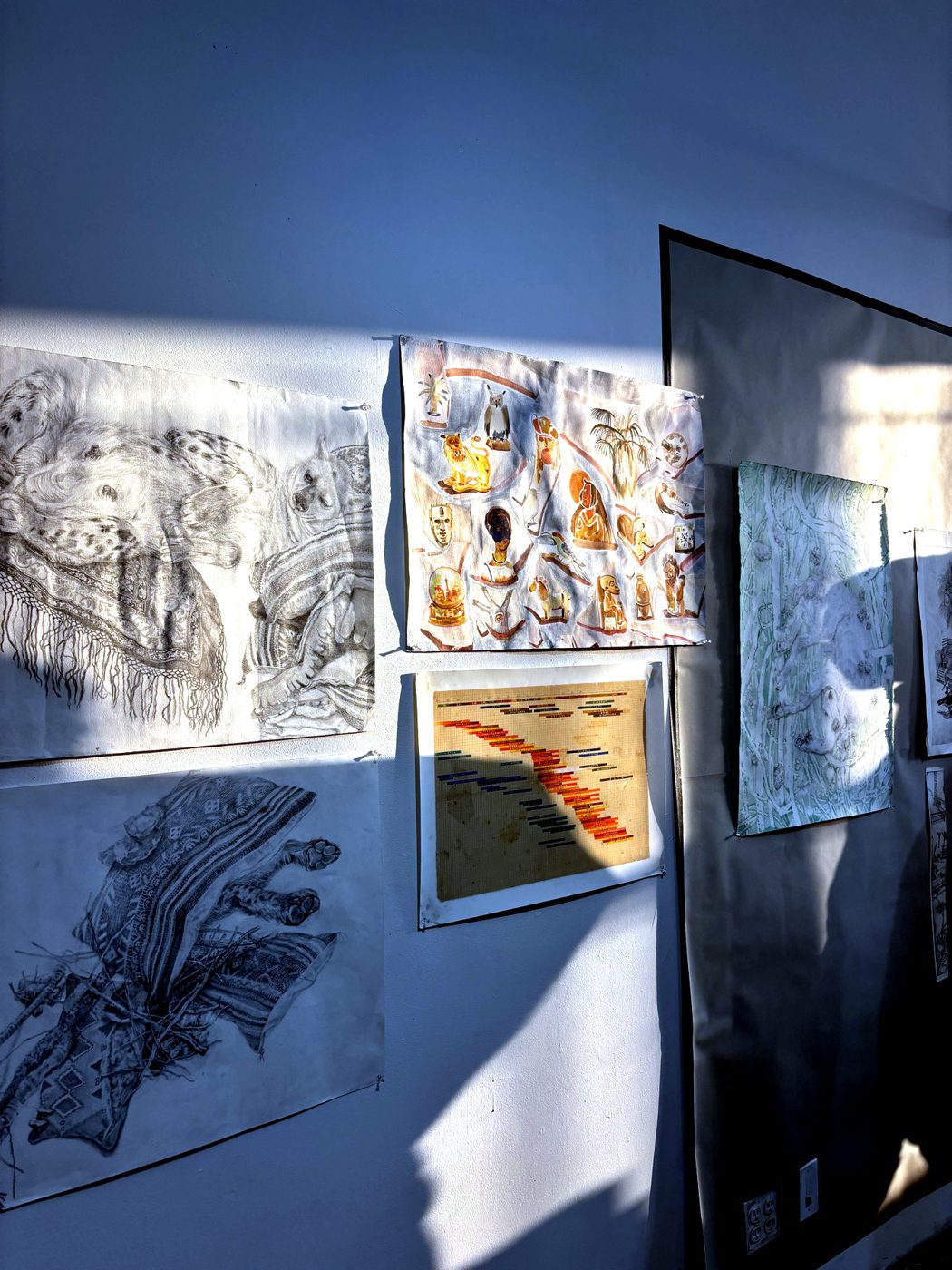
Nivi Alroy, an Israeli artist based in Tel Aviv, builds what she calls alternative universes, worlds built from a mix of scientific research and invented narrative, returning again and again to the body and its limits: climate collapse, flooding, oversized creatures, the aftermath of experiments that went wrong. “Perhaps the doomsday that I keep dreaming about in my art is approaching in reality,” she has said. Her studio walls held a series of detailed pencil drawings: hyenas draped in patterned shawls, a panel of small figures rendered like something out of Egyptian myth, rows of striped, diagonal marks that read almost like a private code.
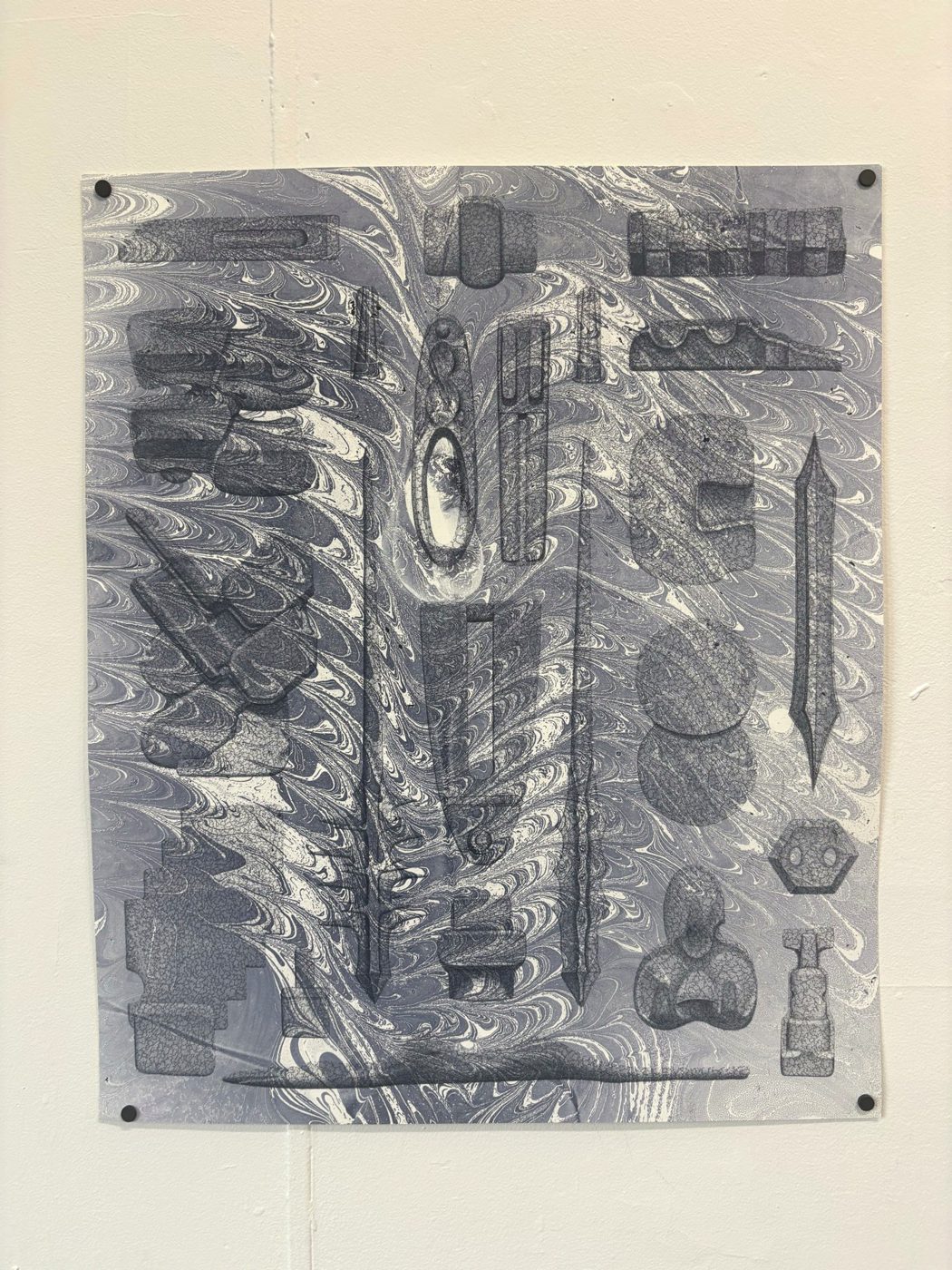
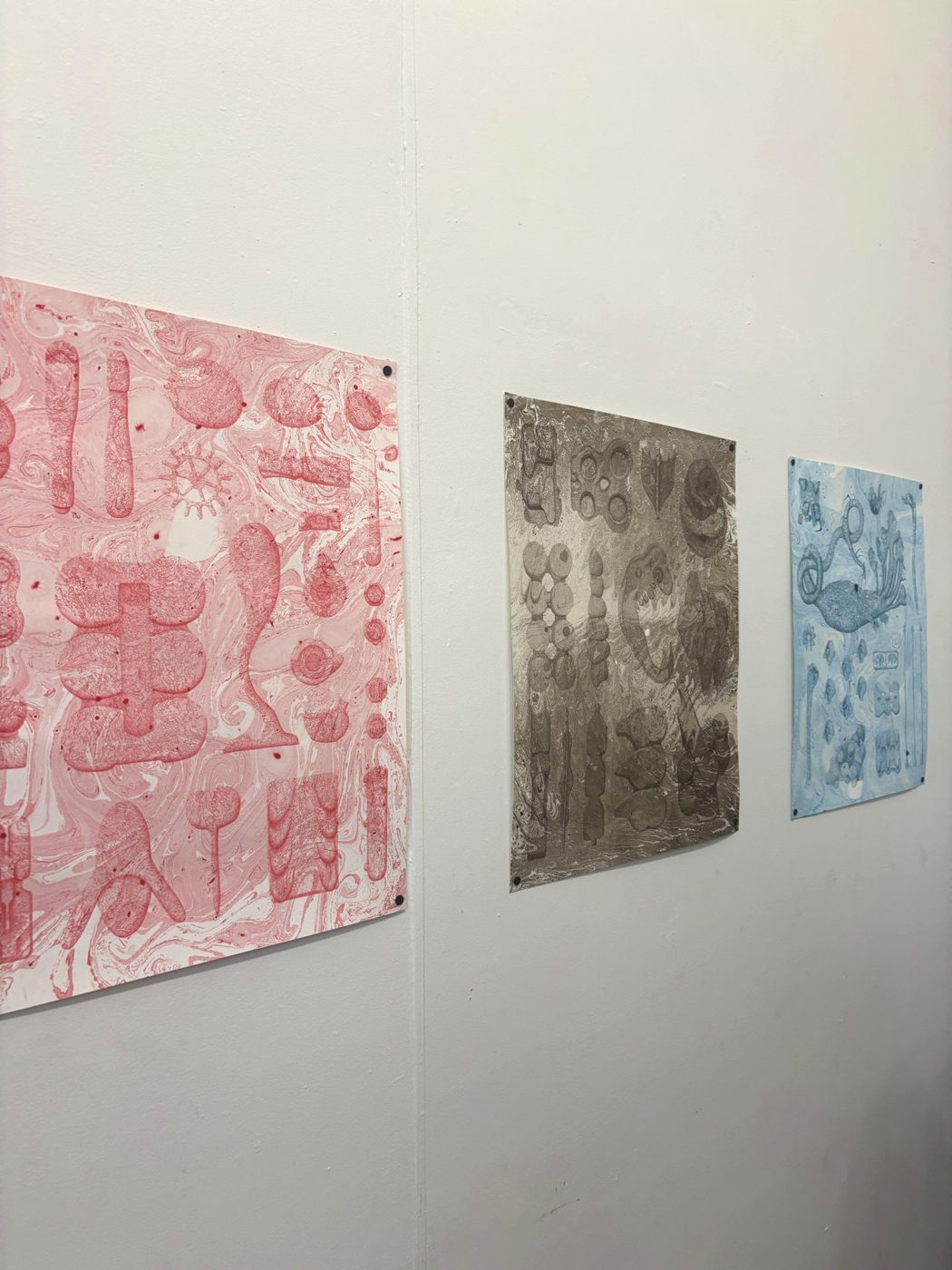
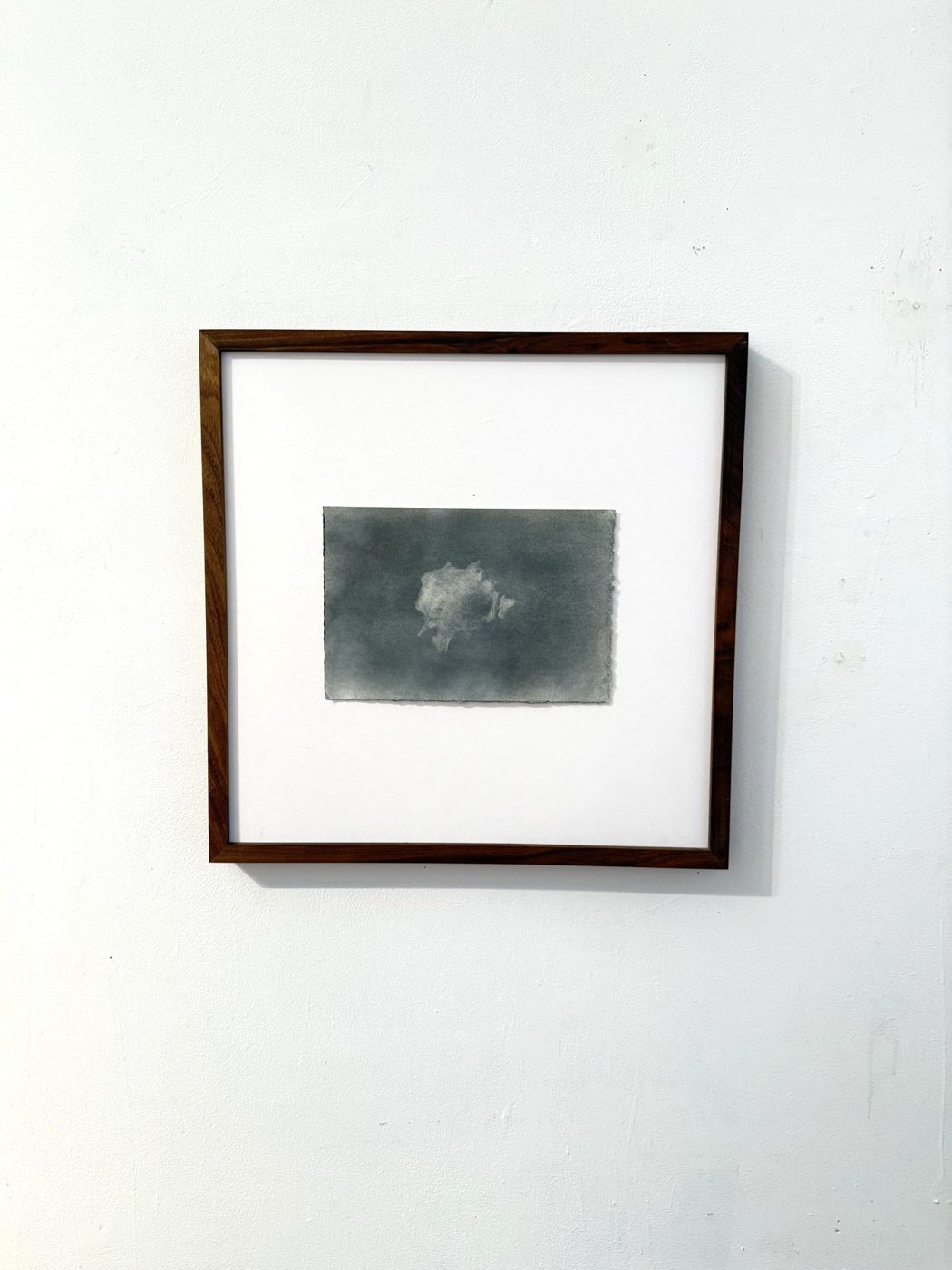
On the ground floor, Kara Springer works with photography, sculpture, and site-specific interventions, all concerned with armature: the underlying structure that holds a body, or a place, together. Her practice is rooted in care and tending, staying attuned to the specific context of a place in order to understand how a structure might live sustainably within it. In her studio, prints hung close together: a marbled, cloud-like surface in grey and blue-green, and a set of pink, grey, and blue biomorphic shapes that looked almost biological, close to something alive.
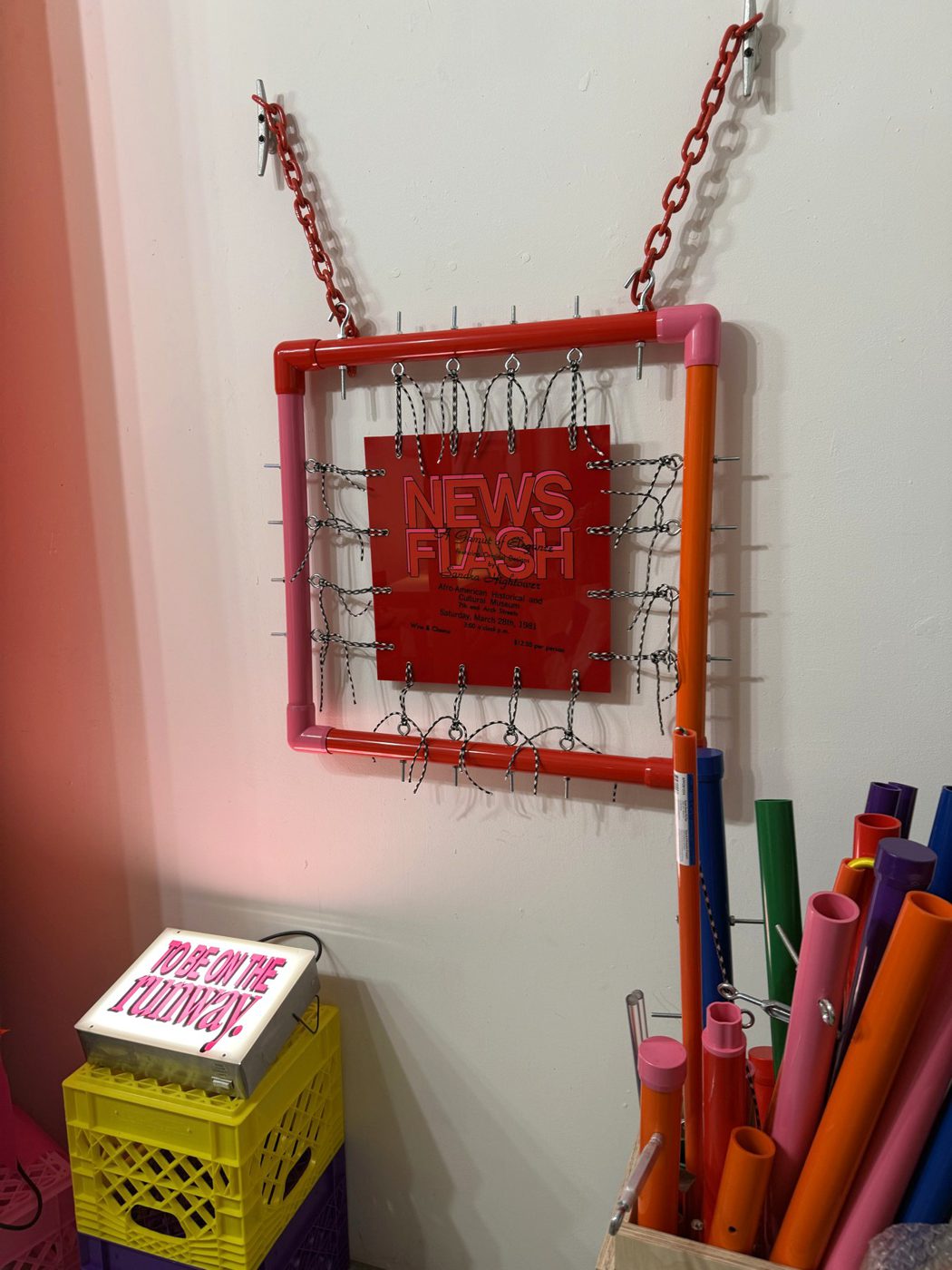
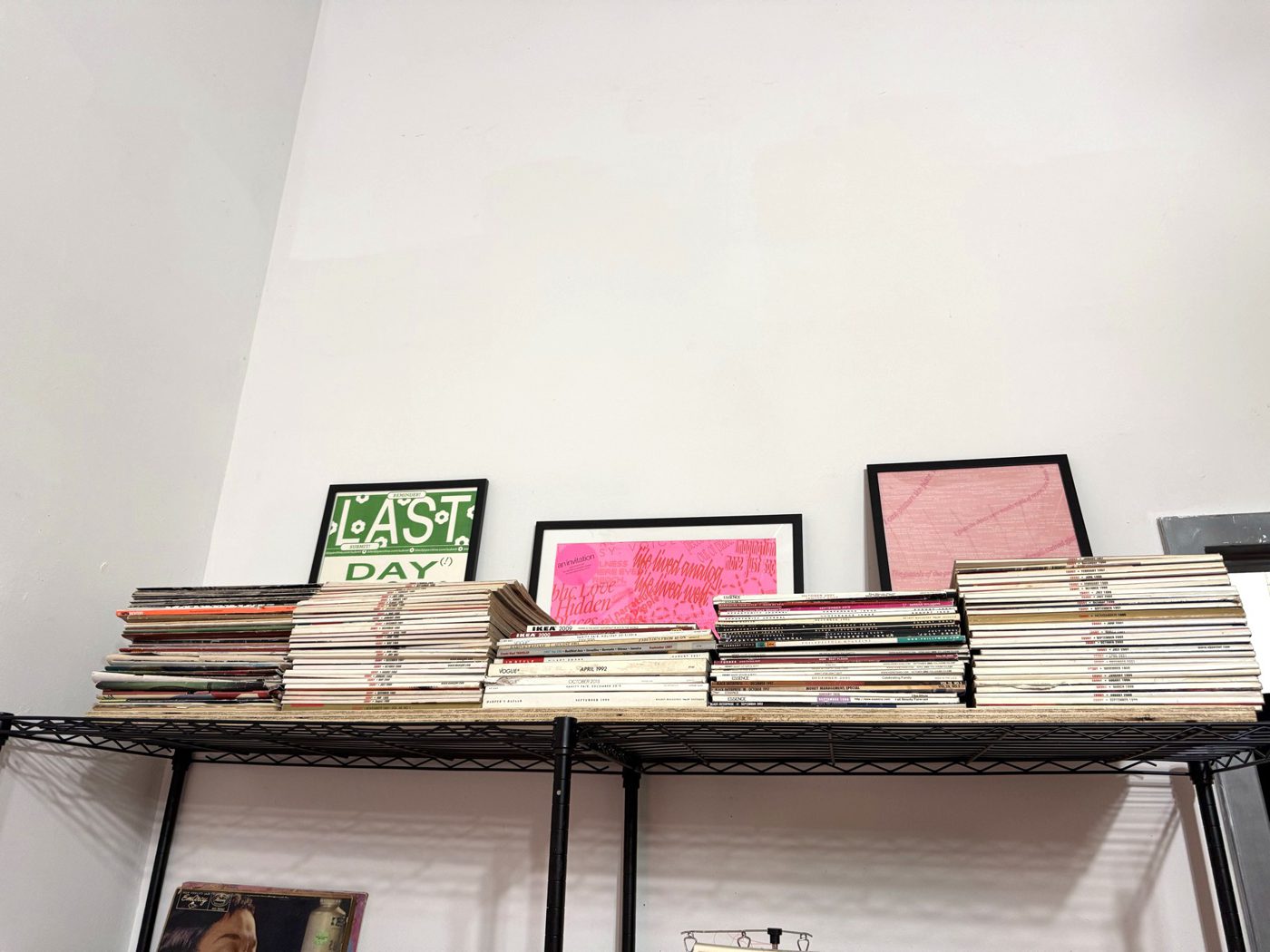
Zoë Pulley examines American heritage and the everyday stories of Black folks through textiles, photographs, and family archives. Her grandmother, Sandra Olivia Moon Hightower, known in the family as GranSan, kept an extensive collection of photographs, letters, clothing, and jewelry in Philadelphia, and Pulley grew up learning the stories behind each object. That inheritance shaped a method she calls surfacing, pulling narrative out of ordinary family material, and it runs through much of her work, including tracing her family’s Great Migration north from Georgia, Alabama, and Tennessee. Pinned to her studio wall was a flyer advertising a 1981 fashion show at Philadelphia’s Afro-American Historical and Cultural Museum: “A Gamut of Elegance, featuring Original Designs by Sandra Hightower.” It was her grandmother’s own runway show, recreated as part of the work itself. As Pulley puts it, her responsibility is to keep asking what it means to continue that legacy of keeping and holding.
Every artist I met answered questions about their work without hesitation. I tried to make it to every open studio, but only made it to eleven of them. ISCP holds 35 studios in that building altogether, all running at once, inside a building that started its life keeping paper dry for a printing press.
At the welcome desk sat Susan Hapgood, ISCP’s executive director, greeting visitors and fielding questions all evening. On my way out, she handed me her card and told me she’d love to read what I write. This is that.