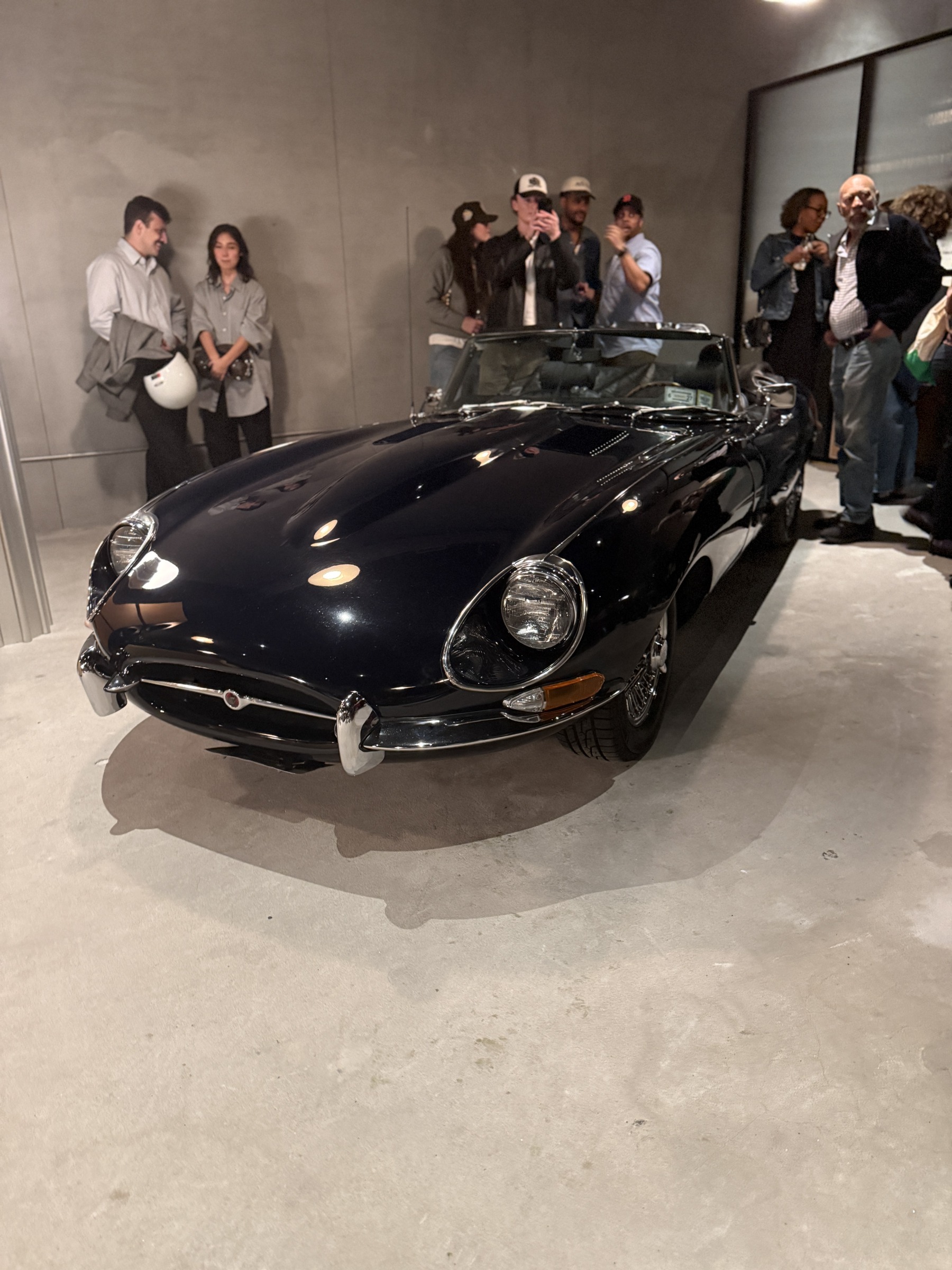
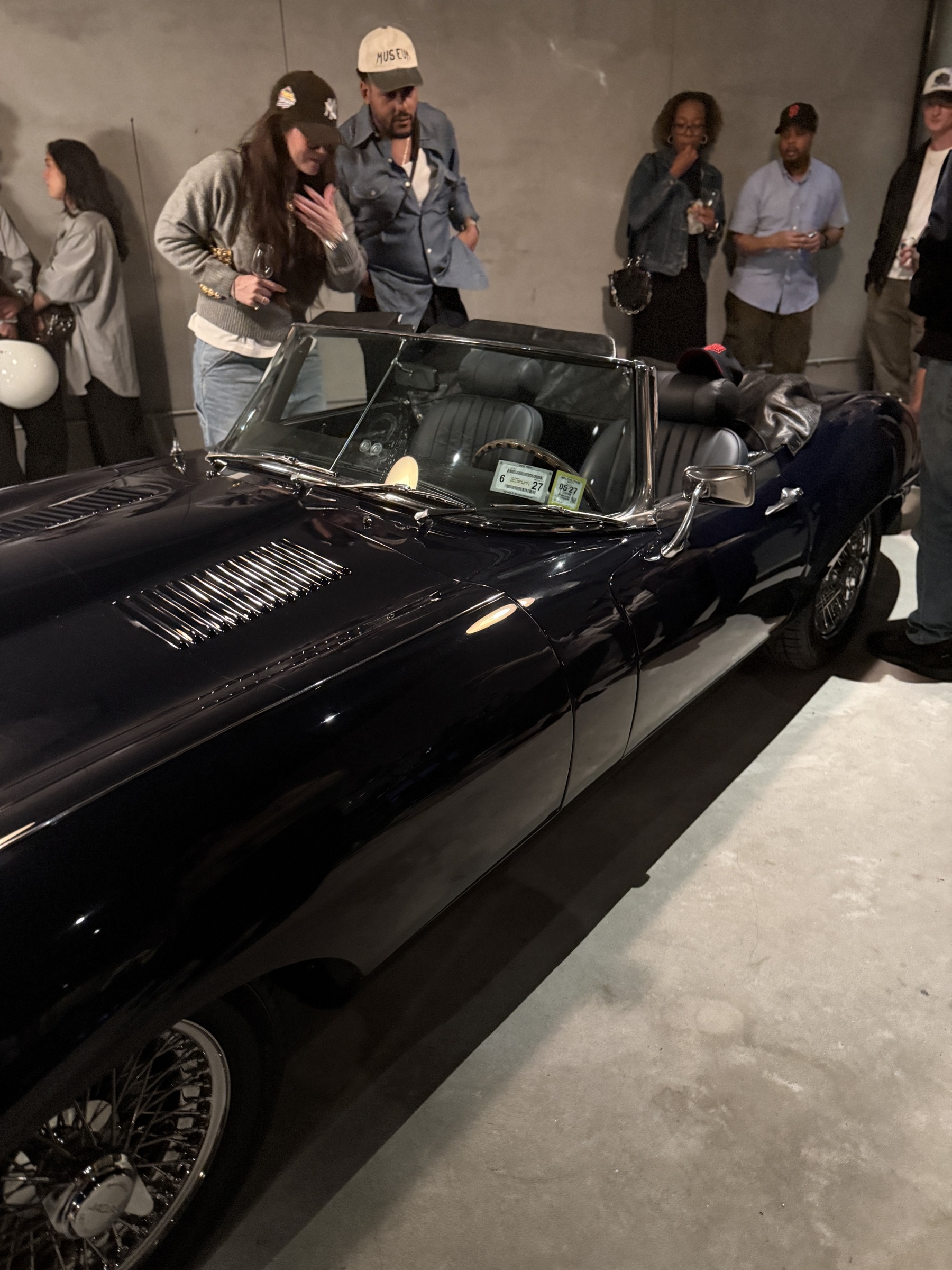
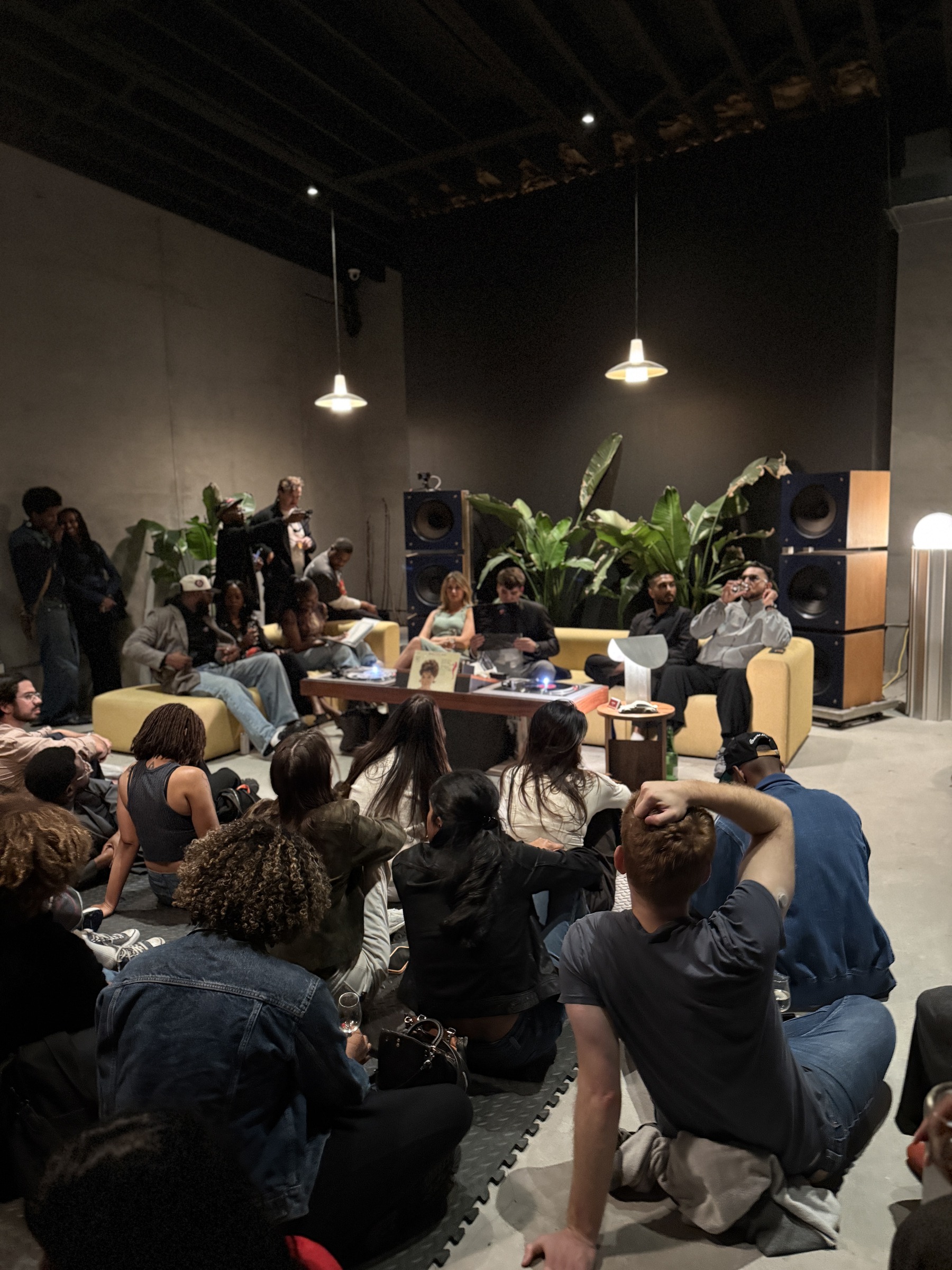
Car Part Time on Grand Street is a place where you can buy a car, work on your own, or sit down with a coffee. The cars sit out on the floor where you can get close to them, which is an unusual thing to be able to do with cars this good, and it makes the room one of the more interesting spaces in Williamsburg.
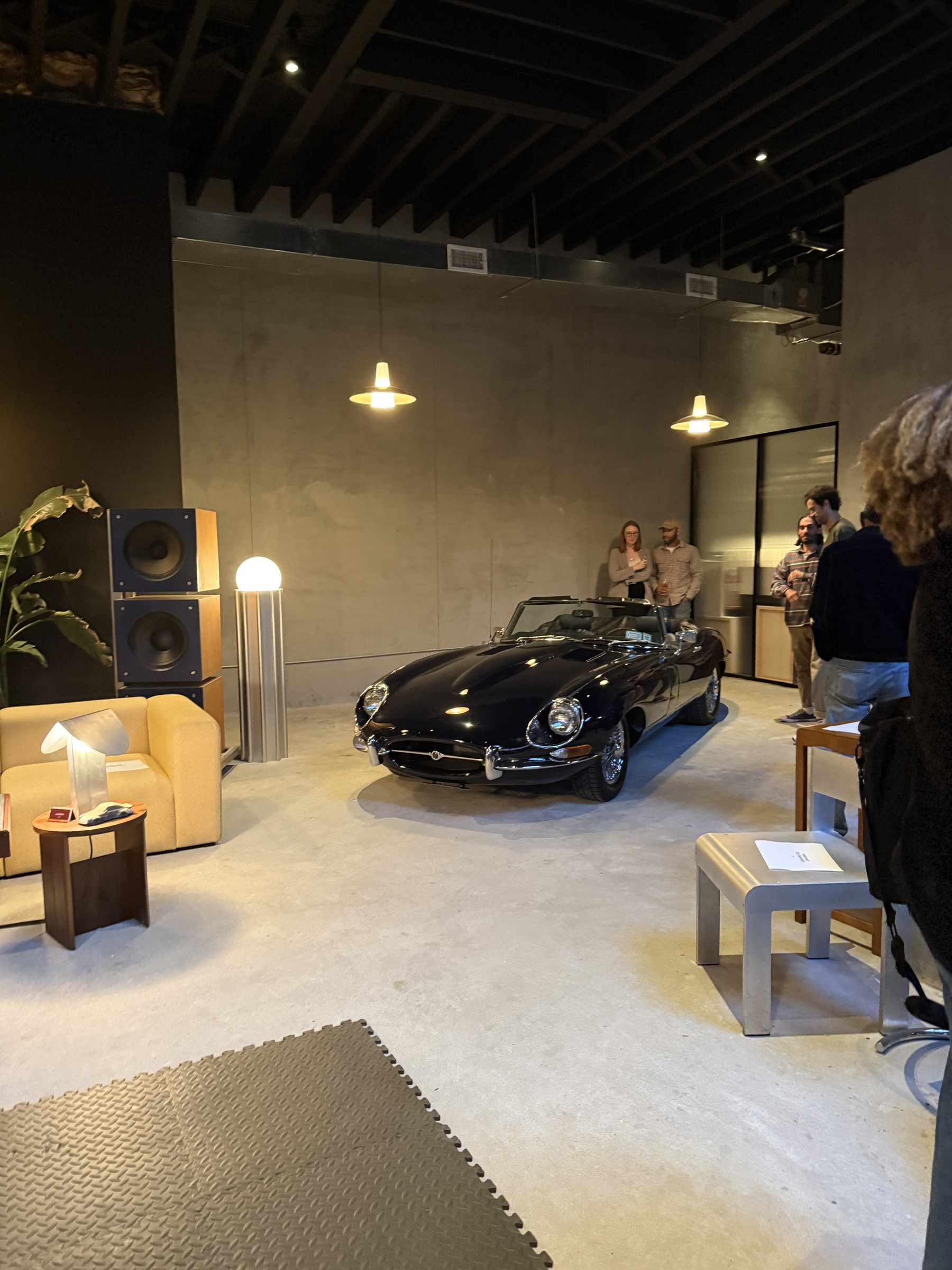
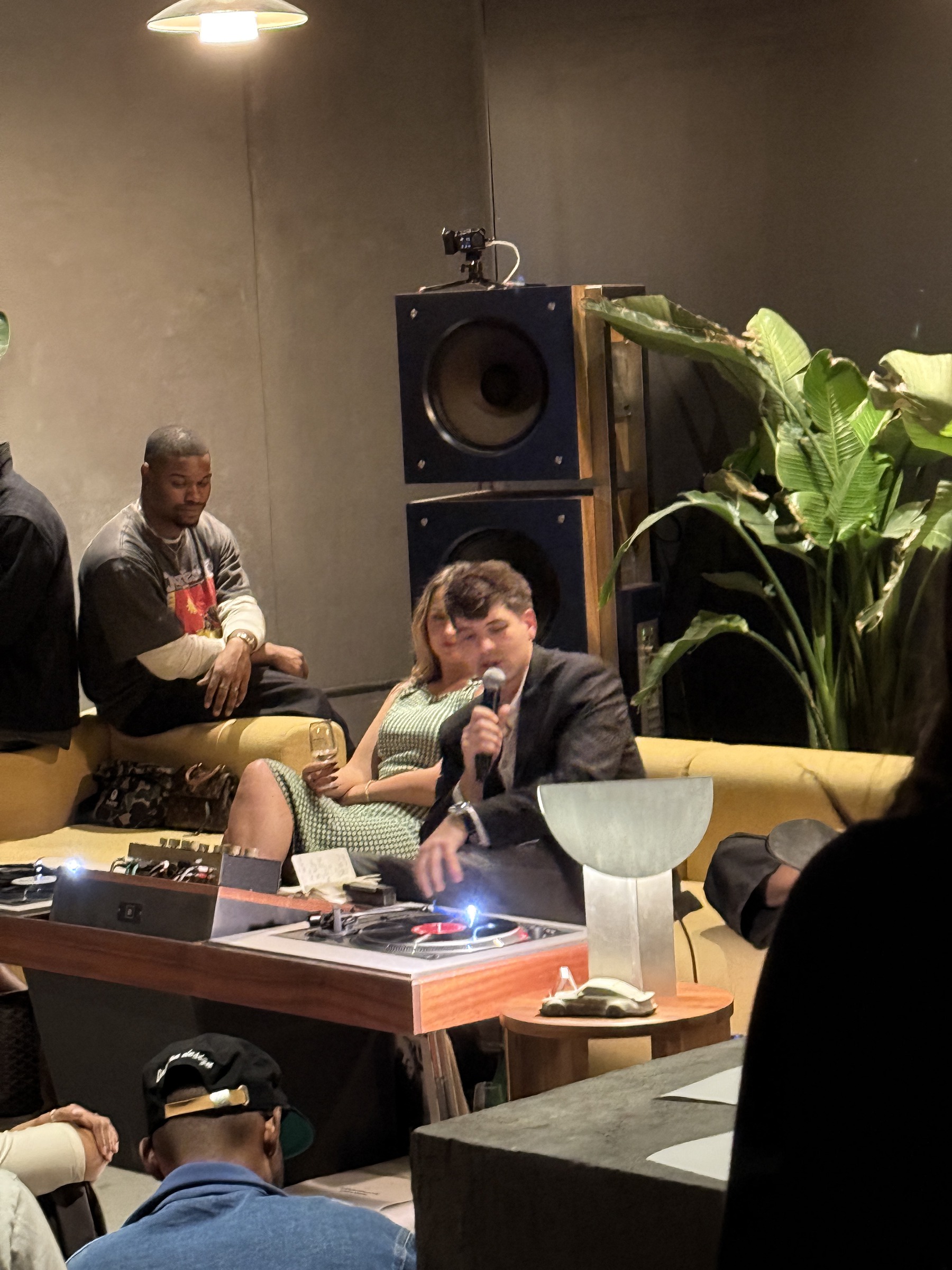
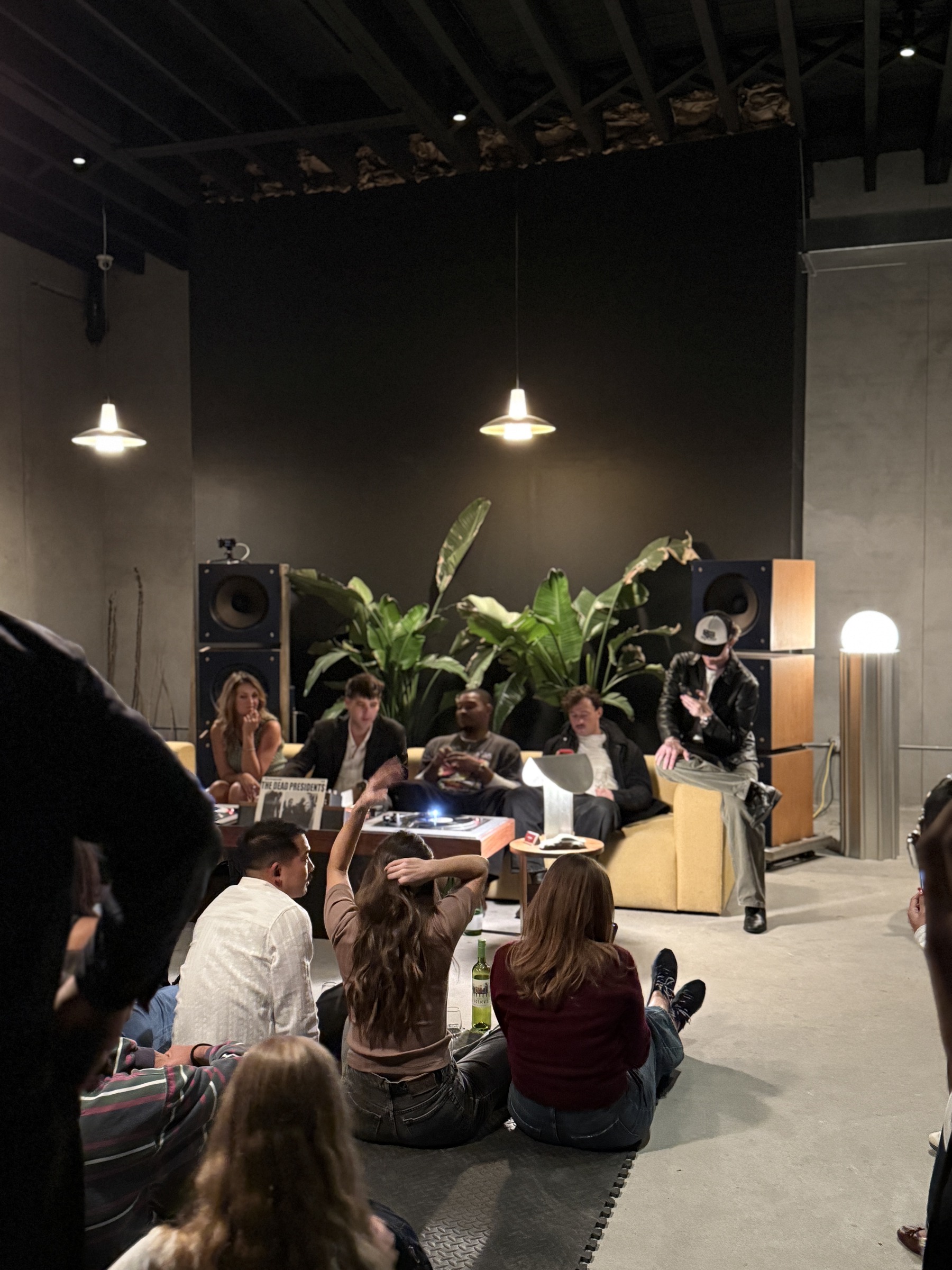
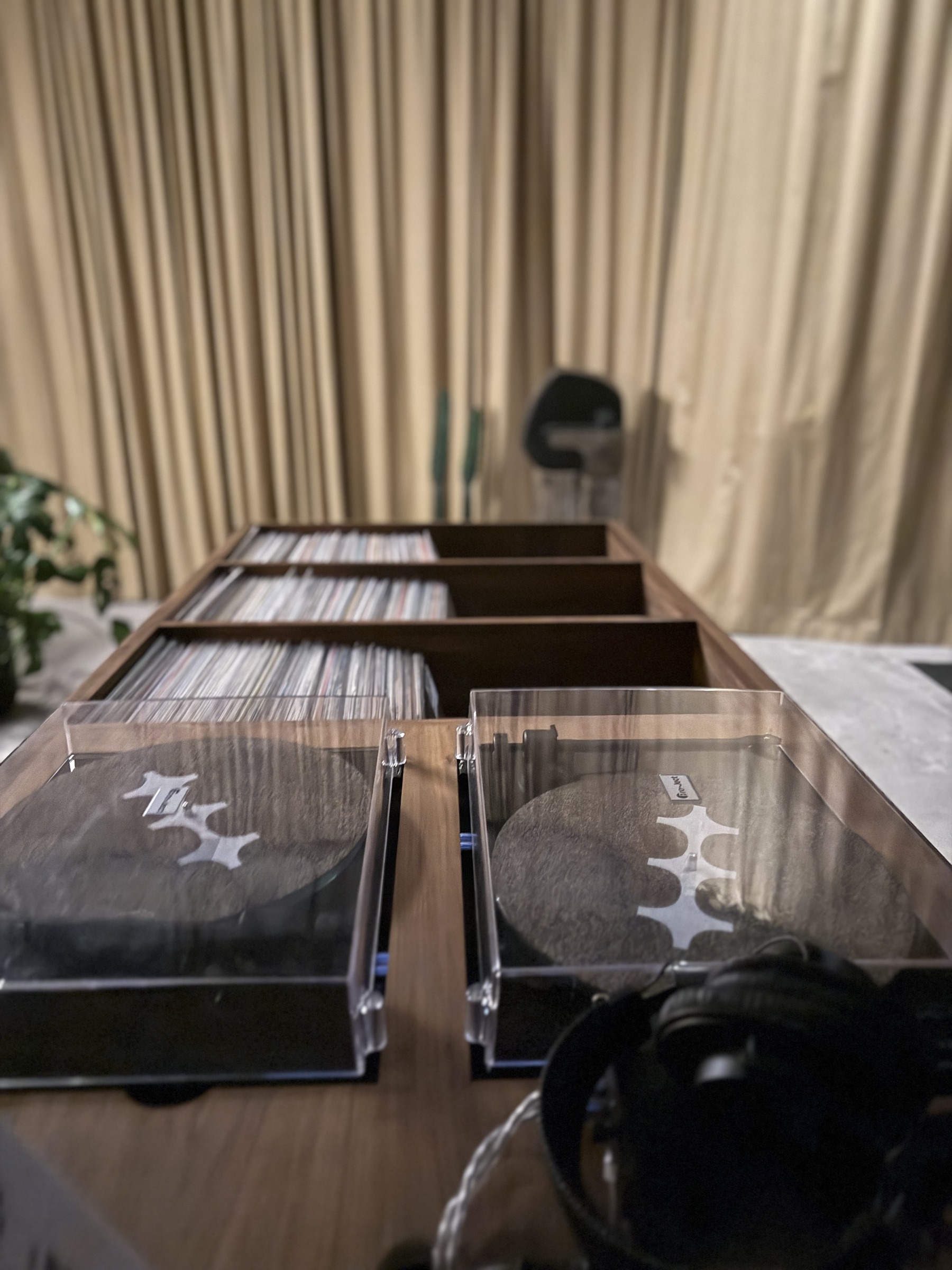
On Wednesday night a black E-Type Jaguar sat in the corner, about a hundred and fifty people filled the floor, and TADDEO, a DJ and musician, sat on a couch with a stack of records beside him. A couple of them were first pressings, and he said there were only a couple because first pressings get expensive. It was John Coltrane’s hundredth birthday, and not in the loose sense of a centennial year. He was born on September 23, 1926, and the night landed on the date itself. TADDEO had built it to run through Coltrane’s career in order, showing off each sleeve as the record played.
He mentioned at the start that we would hear Stravinsky in the music, and Beethoven, and J Dilla.
The biography arrived in pieces between records, and it is a story about perseverance more than anything else. Coltrane was an only child in a musical household built around the church in High Point, North Carolina. Beginning in late 1938 his family started to come apart. His father and his grandfather died within weeks of each other, and his grandmother died the following year. His mother went north to Philadelphia looking for better work, and he stayed behind with relatives to finish school. He graduated in 1943, and his classmates voted him most musical. Then he followed her to Philadelphia, which had the teachers and the bandstands a young player needed.
He enlisted in the Navy on August 6, 1945, the day the first atomic bomb was dropped on Japan, and was stationed at Manana Barracks in Hawaii, where he played with a band called the Melody Masters. The earliest surviving recordings of John Coltrane playing anything come from there. In July of 1946 he sat in with five other Navy musicians on a few standards, "Sweet Lorraine" among them, and somebody kept the tape. He was nineteen, and nothing about it was meant to last.
Seeing Dizzy Gillespie play was what settled the direction. He took up tenor because he did not believe he could live up to Charlie Parker on alto, which is a specific kind of humility to build a career on. Years went by underground. Heroin and alcohol went with them. The call that changed it came from Miles Davis, and by then Coltrane was nearly thirty.
That left him roughly a decade to do all of it. He died in 1967, at forty.
The first thing TADDEO played was a Miles Davis side from the Prestige years, and the pressing crackled because it was an original. Those records came out of two marathon sessions in 1956, the ones that produced Cookin’, Relaxin’, Steamin’ and Workin’. The quintet cut four albums’ worth of material across two days with almost no retakes, largely because they were paying for the studio themselves. Coltrane is in that band, still a sideman, and you can hear what Miles heard.
Then came the first record Coltrane made as a leader, on Prestige in 1957. The track that opens it is called Bakai. Cal Massey wrote it, a trumpeter and composer who was Coltrane’s friend and for a while his roommate, and the word is Arabic for cry. In the room I knew none of that. What I noticed was that the music kept changing underneath itself, smooth and then not, and the friend standing next to me said it sounded like four different records in one. Then Coltrane comes in on the tenor and everything settles. That is the sound that holds a room. A few feet away people were flipping through records for sale the whole time, talking and catching up, which is what Car Part Time is on a Wednesday.
Next was Blue Train, cut in September of 1957 and released the following January. It is the only session Coltrane ever led for Blue Note, which is an odd fact about one of the most recognizable records in jazz. Everyone knew it inside of two bars. The lights were low. TADDEO said it is his favorite recording of all time, and that it was made in a studio with sixteen-foot ceilings, which you can hear once somebody tells you to listen for it. This is the record that made him a legend.
Then came Giant Steps, his first for Atlantic, and he wrote most of it in his house in Philadelphia. TADDEO let the last bars run out and dropped straight into Q-Tip’s Let’s Ride, and the seam did not show. He came to jazz that way himself. He started out collecting nineties hip hop, got curious about where the samples came from, and followed them backward. The night was shaped like his own listening, which is why the transitions were the best part of it.
Somewhere in the Atlantic years he mentioned that Coltrane, who drove a Lincoln Continental because he was not a showy man, also owned a Jaguar E-Type. He kept a white one in the garage of the house in Dix Hills on Long Island that he and Alice Coltrane bought in 1964. Alice was a pianist, organist and harpist, and a considerable composer in her own right, who married him the following year and went on recording in that house long after he was gone. The purchase has never been fully explained. He had a close friend with a famous appetite for fast cars, and that friend was the one who called him up out of obscurity, and people have drawn their own conclusions.
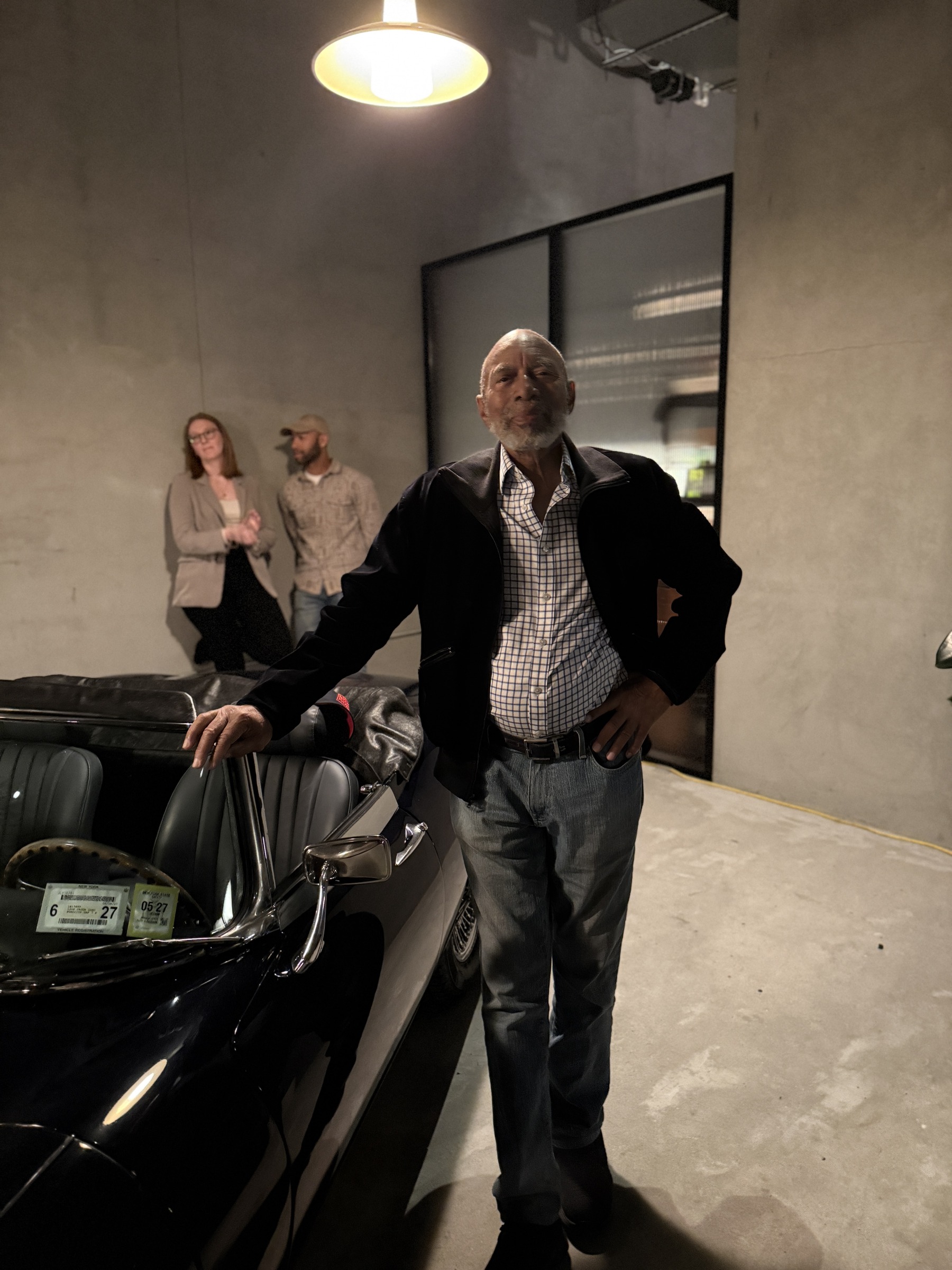
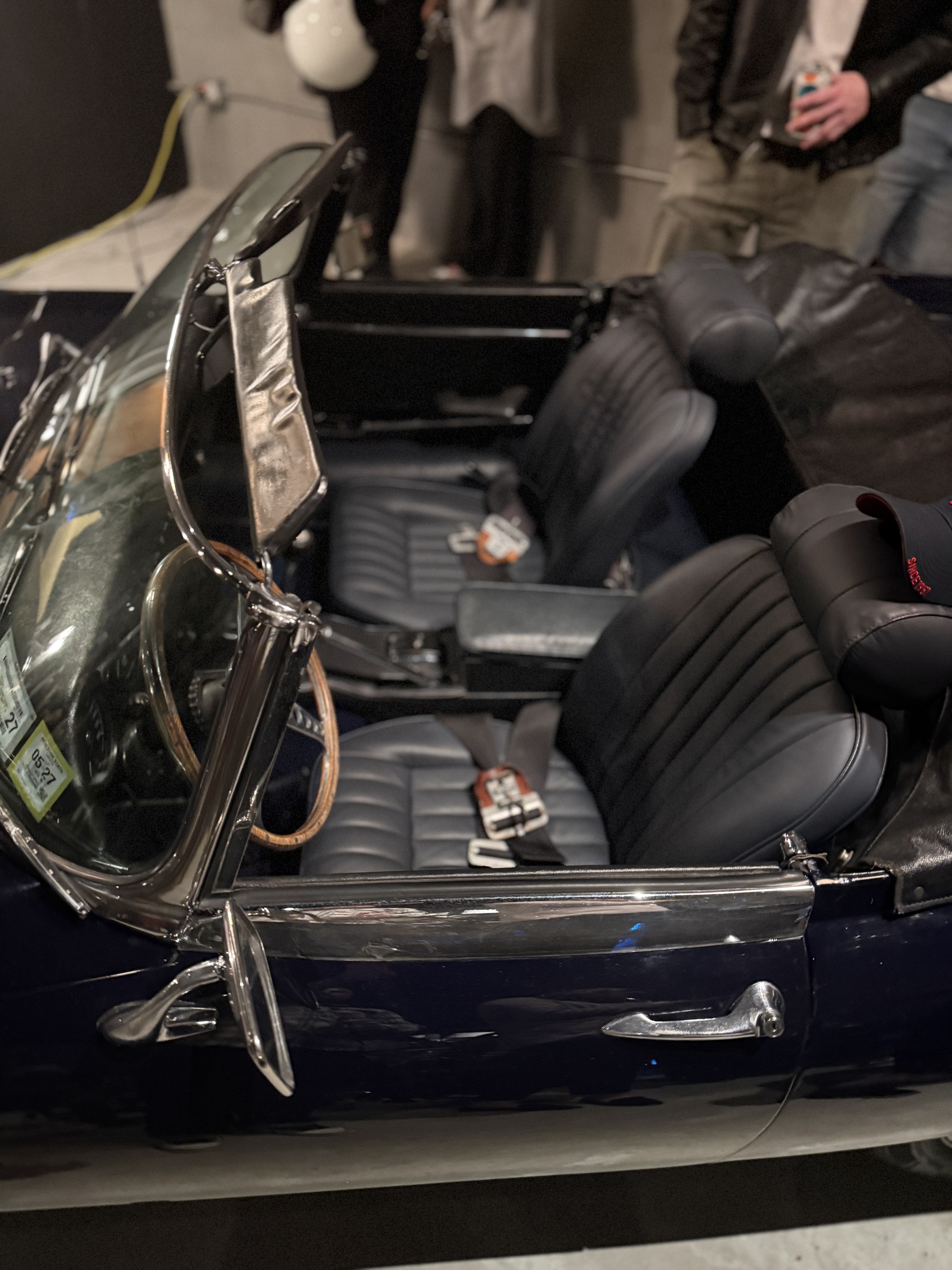
The E-Type in the corner belongs to a man named George. The two facts have nothing to do with each other. He brought his car for the event, and it happens to be the same model.
I got my chance to talk to him late in the night. He has owned it for fifty-five years and it has two hundred thousand miles on it. He is the second owner.
He saw it first as a line of description in the New York Times classifieds, a beautiful black E-Type convertible. The classifieds ran on Sundays, and George had worked out that if he went to the Times building on a Saturday night he could get them before anybody’s paper landed. One Saturday the E-Type was in there with a misprinted phone number, missing its last digit. He started dialing. On the fifth or sixth attempt the owner picked up. He saw the car first thing the next morning, drove it once down Queens Boulevard, made an offer, and bought it before lunch.
His favorite trip in it went from Vancouver down to Tijuana, though not directly. Six weeks and something past ten thousand miles went into it, with detours taken whenever the scenery justified them, and the top never once went up. Social work came first, then a DJ company he built, ran well for years, and sold once he worked out that having his time back was worth more than owning it. He looks twenty years younger than he is. It was his birthday, and he spent it standing next to his car in a room full of strangers listening to a man born on the same day.
The record I was glad to be there for was Someday My Prince Will Come, which TADDEO called his favorite saxophone solo of all time. It is a Miles Davis record from April of 1961. By then Coltrane had left to lead his own groups, and he came back for two tracks. It was the last time the two of them recorded together in a studio.
What makes the solo is what sits next to it. Hank Mobley plays first, mellow and even and completely reasonable. Then Coltrane takes two choruses over the same chord changes and does something else entirely with them, dense and searching and slightly too much, in the manner people had started calling sheets of sound. The tune is the same and the chords are the same, and the two men answer them completely differently, one after the other. You can hear the decade turn over inside a single track.
Then came Olé, which has two bass players on it. That is rare, and the reason is that one of them holds a drone down at the bottom while the other improvises above it, so the low end never moves and everything else does. In the room the bass arrives before anything else and the saxophone cuts through it. The flute on that record is Eric Dolphy, who was under contract elsewhere at the time and appears on the original pressing under the name George Lane.
The last record of the night was Alabama. Someone in the audience leaned over to explain where the melody comes from, which is the cadence of a memorial speech given after the church bombing in Birmingham. Once you know that, you cannot hear it as anything else. The phrases end where a speaker would stop for breath. It stays somber and slow, and it holds a long time before it resolves.
I realized afterward how the evening had been shaped. TADDEO ran it in order, so the records arranged themselves, and a whole career came out in the sequence it was made. The encore was Dead Presidents, which closes his own arc rather than Coltrane’s, since it is the soul and funk that the hip hop he started on was built from. I heard it from across the room while George was describing a road trip, and that seems like the right way to spend the end of a listening session.
TADDEO’s night was billed as Field Notes 06, which is Car Part Time’s own series and shares nothing with ours but a good name. Car Part Time is at 904 Grand Street.